North Island
Lake Taupo Region
For those of you new to our blog, click here…
For those of you that are reading one of our blogs for the first time, the blog is called “Fridaes’ Adventures,” obvious enough, but we added an explanatory subtitle of “People First.” This calls out our tendency to be more interested in the people we meet than the places we go. We try to get to know the people first and let them teach us about the landmarks, the food, and the culture. The magic is hardly ever planned, but for us it unfolds usually when we find something or meet someone unexpected: serendipity. A great day is one in which we had nothing planned, or when we abandon a plan because somebody tells us about a more interesting place to see or an activity to do, and it often turns out better than anything we could have planned.
We travel primarily using Airbnb. One reason is that there is a simple tool you can use on the website to communicate with your hosts before you make an arrangement to stay. (Some people might call this a “hack,” but it’s just a friendly way to talk with your potential hosts before you agree to rent.) We often tell our hosts that we keep a blog and would like to get to know them as a part of our stay. Some hosts are very willing but some tell us that they’re busy, don’t have the time, or maybe that it’s just a business and that they don’t even live onsite. That is fine for us if we’re not interested in writing about that town or place. But often, we want to investigate a place, and they’re is no better place to start learning than with a willing host. And when a host is interested in us, and willing to open up, that makes for a brilliant start! In this blog, we met a couple of hosts who were very willing to share generously! And we reconnected with some old friends who used to live in our hometown of Winters.
Rebecca’s writing is entered in italics like this and mine is in normal text like this. She usually does the hard work of remembering people and place names, and she often records the food we eat. For my part, I often try to research the place a bit and throw in some history and analysis. We record them this way so you get a bit of our unique voices. Also, our trips are recorded here newest at the top. So if you’re following longer, multi-part story, you might need to scroll down to find the beginning of it. Happy reading. We love to hear from our readers in the comment section below. Tell us if any of this is interesting or if you’ve had similar experiences. And please subscribe and share on social media. If you subscribe you’ll only receive an email when we post a new blog, and that’s only a few times a year, at best. Thanks for coming along!
We were up and out before nine. James had left for work and Kevin was just getting up. After goodbyes we drove north out of the city and Woody had little trouble easing into really driving on the left. But, just outside town, there was a warning on the overhead road signs of a traffic accident ahead, and we were diverted to back roads. It was an hour extra to get around the closed highway. I never heard or saw what happened.
The land is green and lush, and we noticed the big pine forests and other woods are planted in rows, so I assume they harvest them. We then saw acres of cleared land and acres of little seedlings—so it is quite an industry.
The rain was intermittent but continued all day—sometimes it was a downpour and then the sun would come out and then it would rain softly. Some towns we passed through looked a bit down and out, but most looked charming and better off. There are many mostly small,Queen Anne Victorian houses.
We decided we’d stop for lunch at the next town. It was called Bulls. It was rougher than the previous one and after walking up and down the main street we managed to find an Indian restaurant that was passable, but not memorable.
From there we drove toward the west side of Lake Taupo. We were following GPS and we drove on smaller roads near Wiahaha to our Airbnb. The place is away from anything and up on a raised plain that overlooks the lake off in the distance. It is hill country and around it are sheep and cattle grazing and a dense forest covers much of the several of the hills.
I had booked this Airbnb because it looked like a very nice, out-of-the-way place, quiet and in the country. I didn’t realize just how out-of-the-way it was! We had to drive down narrow, dirt roads for about a half hour. But when we finally arrived, our host was welcoming and gracious. Cathy (Cathy with a C, not to be confused with Peter and Cathy from Wellington) was a recent widow and still fulltime employed in prison administration, so she seemed very busy to keep up and run this Airbnb. She has two suites that her husband built added on to the large deck that looks out over the plains that run gently down to Lake Taupo, about five miles away. The views in all directions are magnificent.
Cathy raises alpacas for their wool. It gets shorn and collected each year. They had been shorn in November, their springtime. Three of the females were pregnant. She told us that we would see them being fed in the morning. She has a friendly poodle mix, part wolfhound, I think. She is friendly but a bit aggressive for affection. I played catch with her for a bit, but he’s the sort of dog that loves to fetch but doesn’t like to give the ball back.
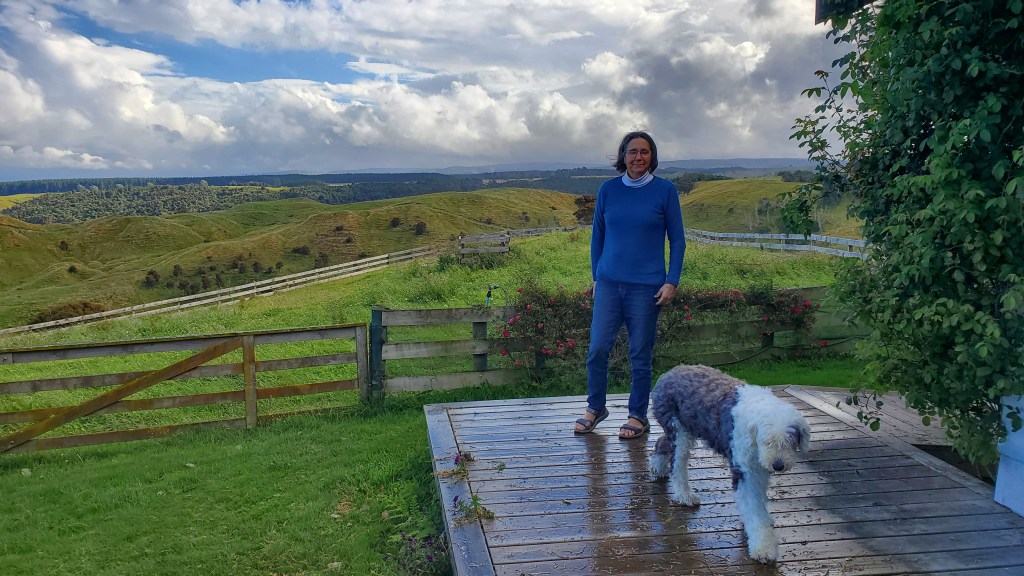
Harry was friendly but didn’t want to share her ball.
She showed us our place around back. It was a pleasant room, decorated with photos of sunsets and sunrises taken around the hill.
Because it was so isolated, we had arranged for her to make us dinner for $20 each extra. So we rested and unpacked while she made dinner. She had a roast and potatoes and a lovely salad ready when we went back to the main house at 7:30. We learned that she was a recent widow. Her husband had been ill for a few years and died in November of a heart attack. She runs all this by herself. Her job in an administrator at the prison about 40 miles km away. Her mom, Jocelyne, was a high school art teacher for much of her life and joined us for dinner, They are nice people, and we had an enjoyable discussion over dinner.
Cathy had prepared a lovely dessert called a pavlova. It’s a meringue, sugar and kiwi fruit. It was very nice, but a bit too sweet for me to have much of it.
Rebecca wasn’t feeling well, so we headed to bed shortly after dinner. The rain continued through the night. The next morning the sun came out and filled the dining room with golden sunlight as we enjoyed a wonderful breakfast while we watched the alpacas come up to the fence, looking for their breakfast.
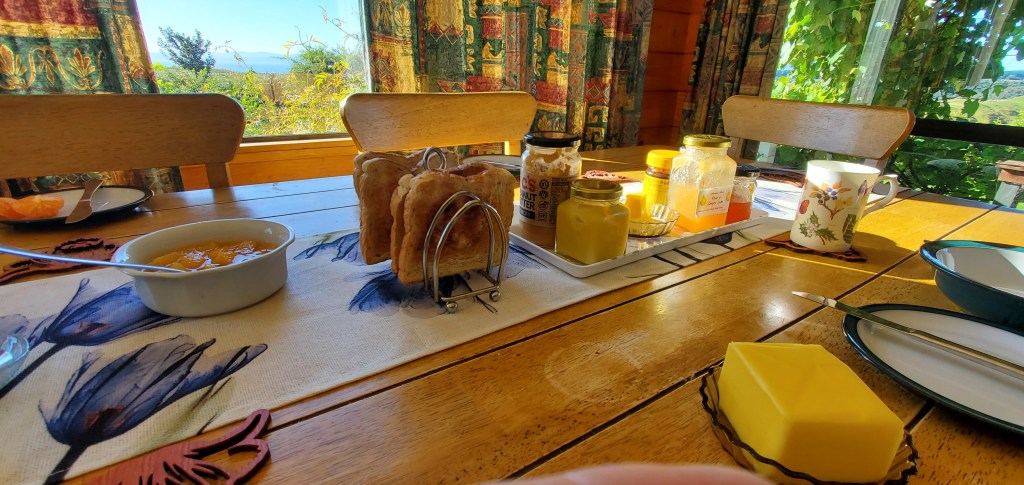
The morning was clear of any clouds and sunny. The mountains in the east in the distance had snow caps. What a difference a day makes! And what a lovely 360 degree view she has!
While Cathy was getting breakfast together, I tried to play with her sheepdog—Harry, but didn’t know that when someone throws the ball, it should be brought back.
She had a great spread for us—cereal, toast, several kinds of jam (two of which she had made herself—peach-ginger was my favorite) canned and fresh fruit and homemade yogurt.
We ate our fill and then went outside to feed the alpacas and cows but neither group was cooperative. I did have alpaca food in my hand but never got them to nibble. The cows didn’t come up from the lower pasture, so we just saw their hairy faces from afar.
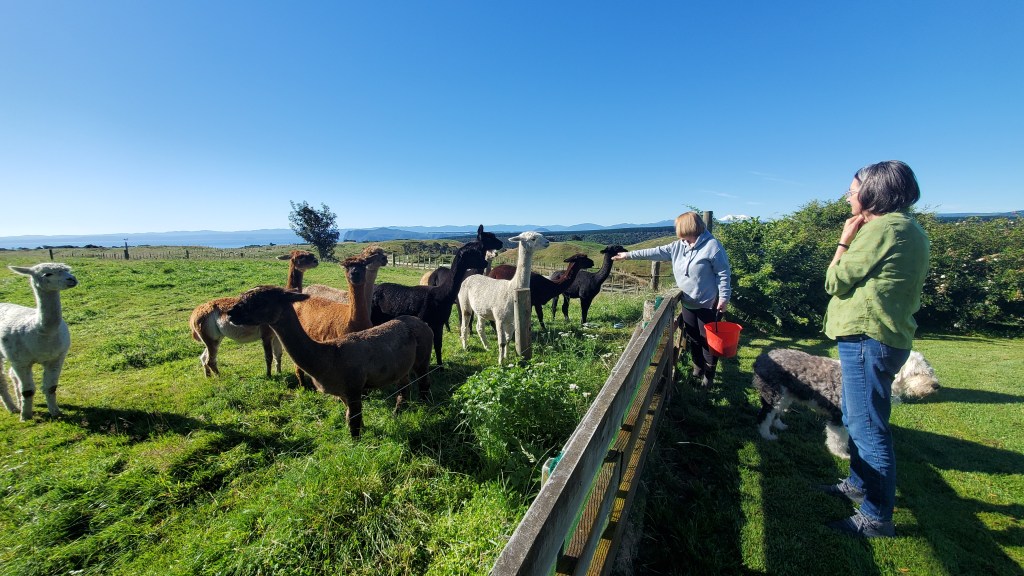
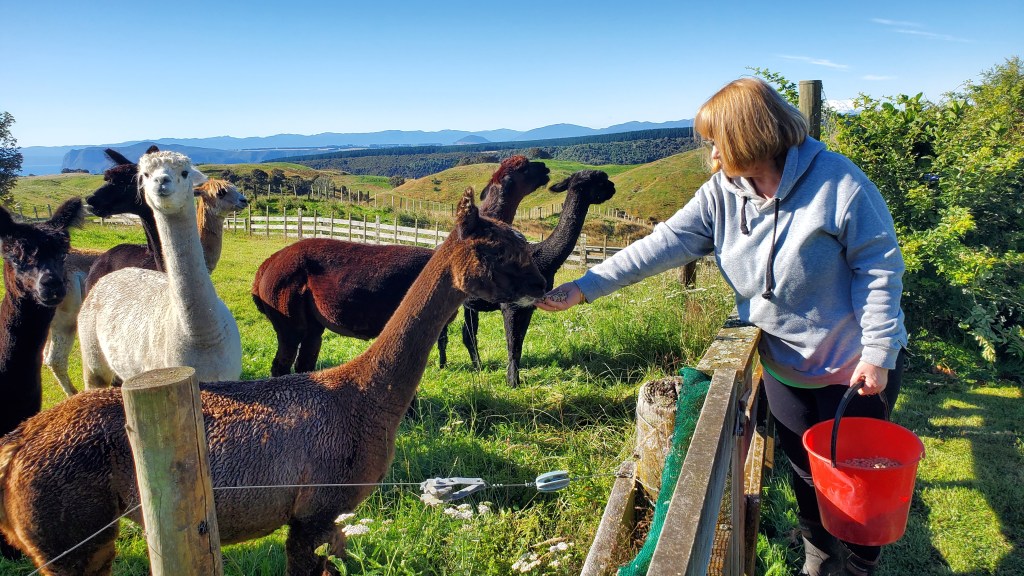

We packed up and bid our farewells to Cathy and her mother. We had to get moving if we were to make it to Lake Taupo, hike around the dam and get to our next Airbnb by 3pm. Cathy told us that some of her alpacas were pregnant and would be having babies soon. I asked her if she would send us photos of the babies once they were born. She said that she’d be glad to do it. So, below is a collage of the photos she sent us a couple of weeks later. Cathy was very generous to us with her time and shared with us her lovely little farm.

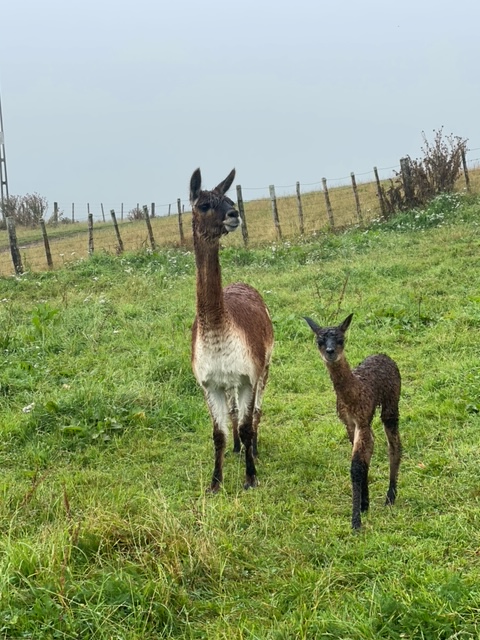

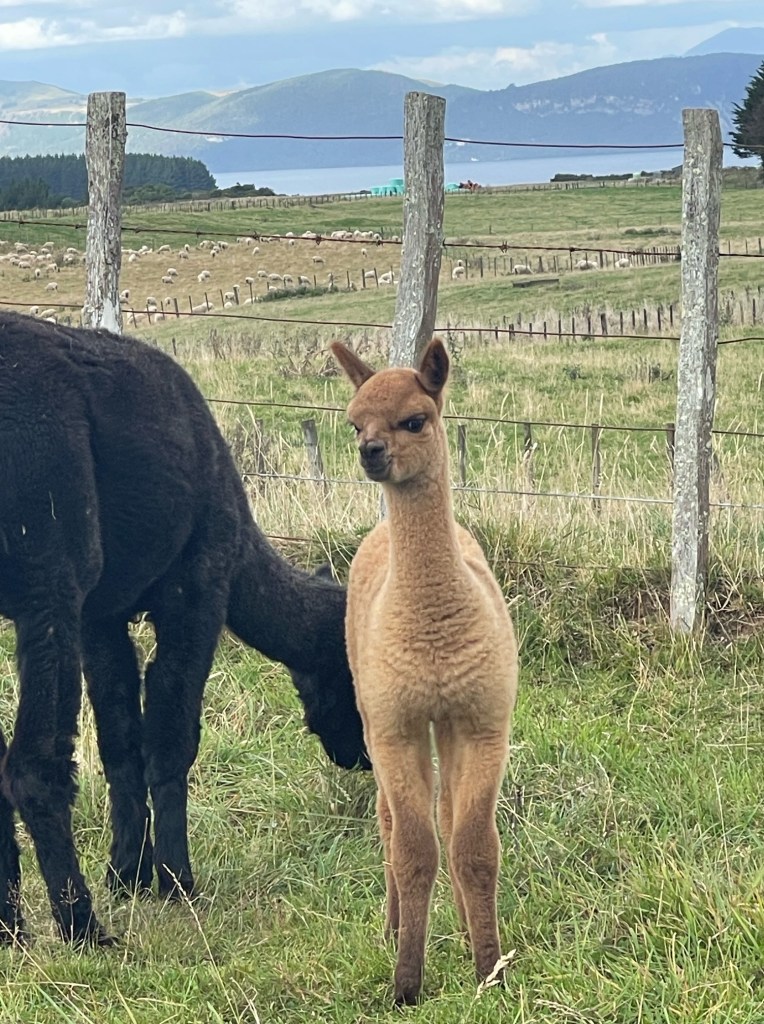

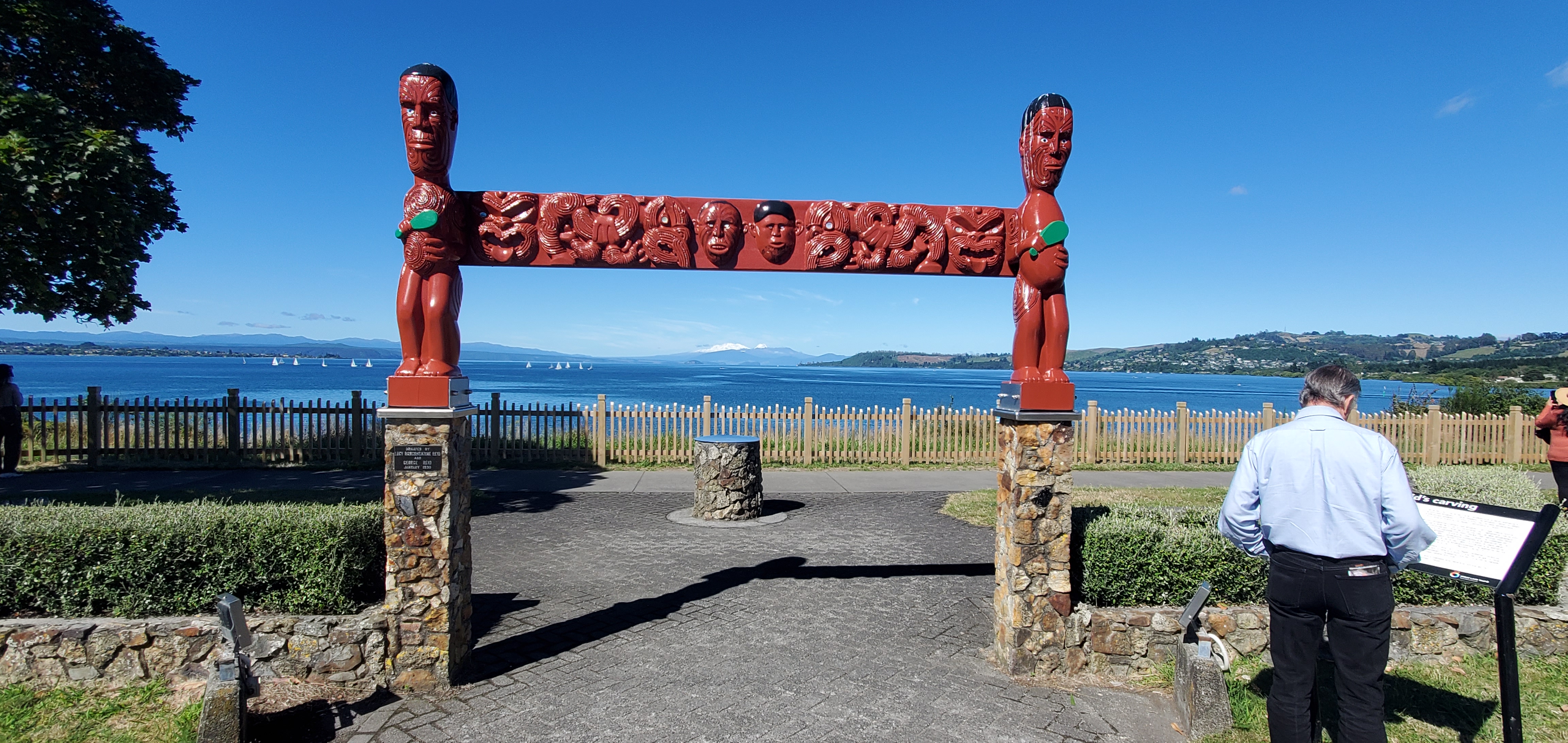
The drive north and around the lake to the largest town, Taupo was green and lovely. We parked the car and walked along the lake’s edge. We saw parasailers being pulled by big motorboats moving slowly across the water.
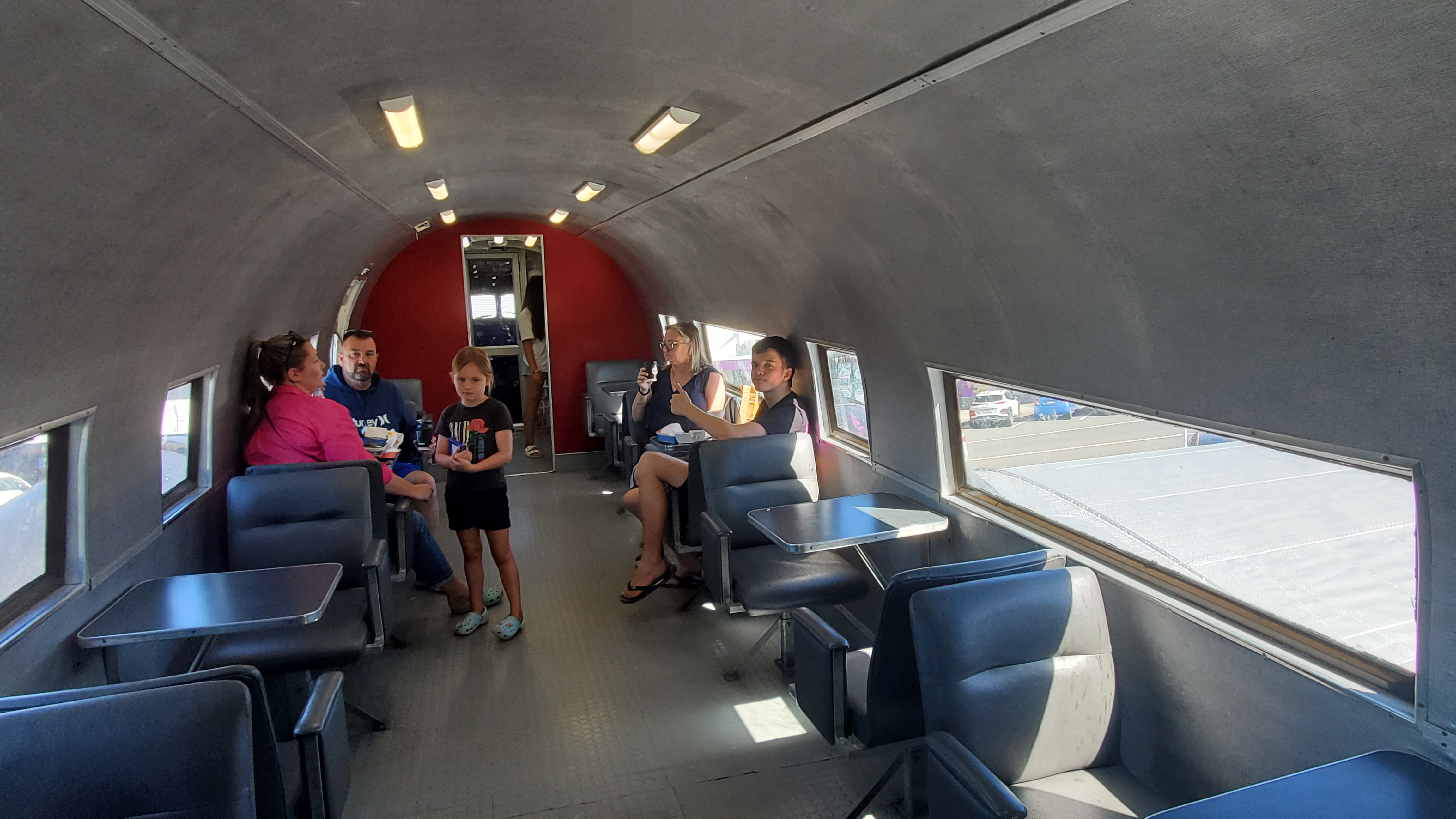
We walked along the shore and up a busy street past a McDonalds that had a huge old WWII era plane in their side yard. You could climb a ladder and eat there. We went to investigate but didn’t dine there, it was still early. There were people around, but we were both surprised that with this being their mid-summer how not crowded it was. You can see this is a vacation spot but not many are vacationing.

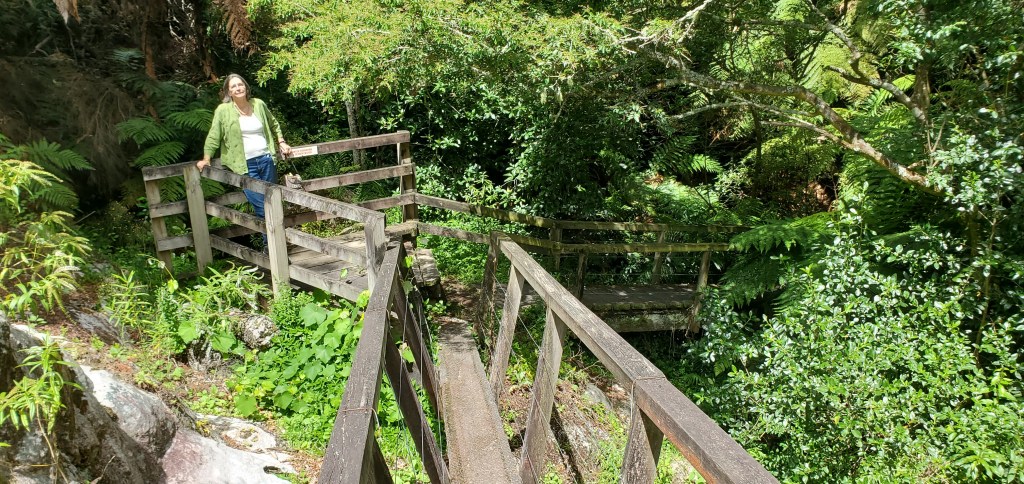
We drove farther north a few miles to Haka Falls. We parked the car and walked along the path. There were lots of people there at least as far as the overlook, but then we decided to hike farther, and we saw on the map on the sign board you could cross over at the dam and walk back on the other side. I thought the walk would be good for my cold. So, after the overlook where you could see a huge amount of water squeezing through a narrow canyon and rushing down to the river below it (but not very tall waterfall—maybe 20ft?) we walked along the blue water and watched it churn. We also joined the throng of taking pictures along the way. But then our path went higher up and we met few people along this route, only runners that must use this path for a daily routine. I’d trip and break my arm if I did it—it was muddy from last night’s rain and hard to get through in places. Overhead the trees were a green roof of trees, and we could hear invisible birds tell us their stories. I wish I knew their language. It was a pleasant hike, but we had no idea how far it was–the sign map had no distance. After an hour or more I looked at our moving icon on my GPS and realized that if we were going to go all the way to the dam, we’d be here way too long, so we saw the river would be crossed by a highway with a bridge so we took the path up and crossed on the bridge and returned by the path on the other side. It gave us a different vantage point when we came to the falls, and I liked It better. I did have trouble hiking up the hills. I think my chest cold doesn’t give me enough oxygen and my nose keeps running.
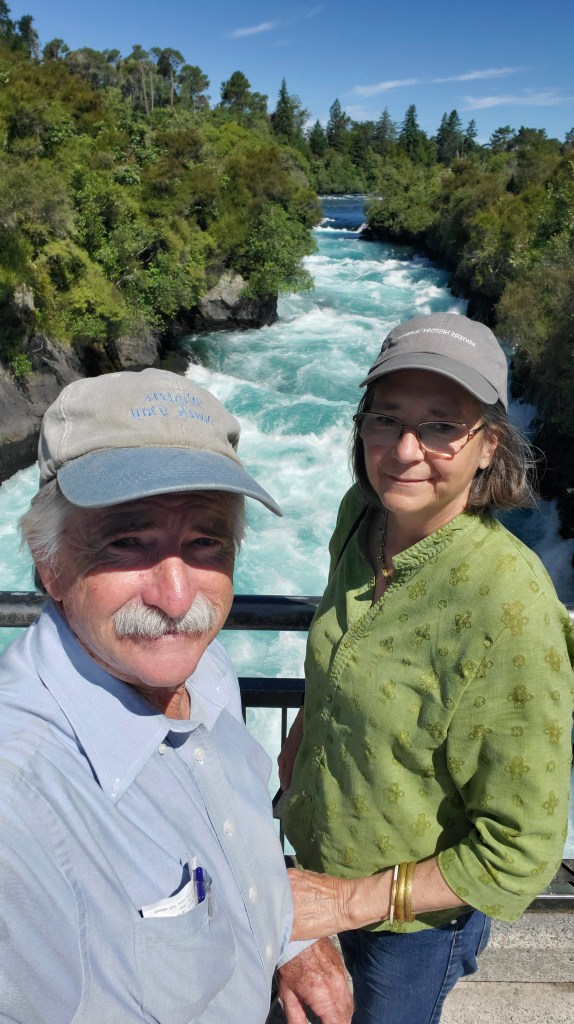

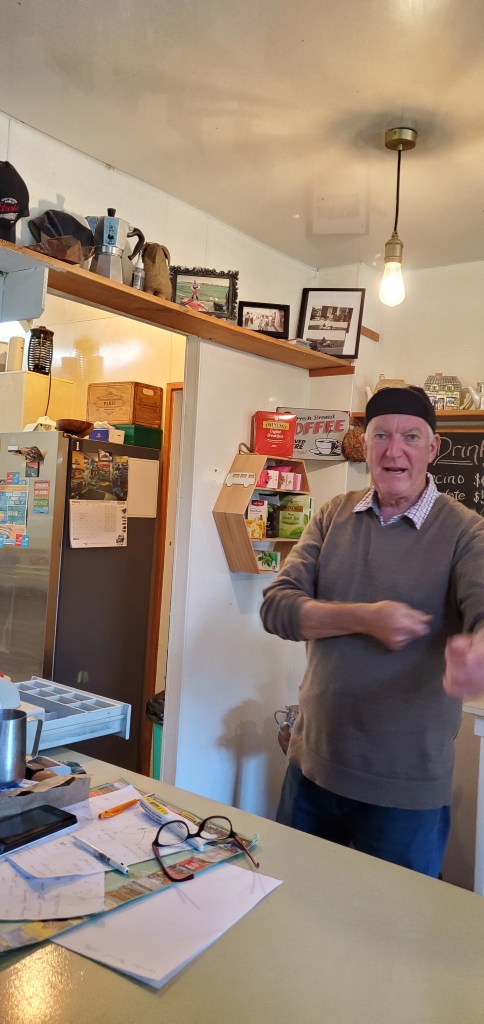
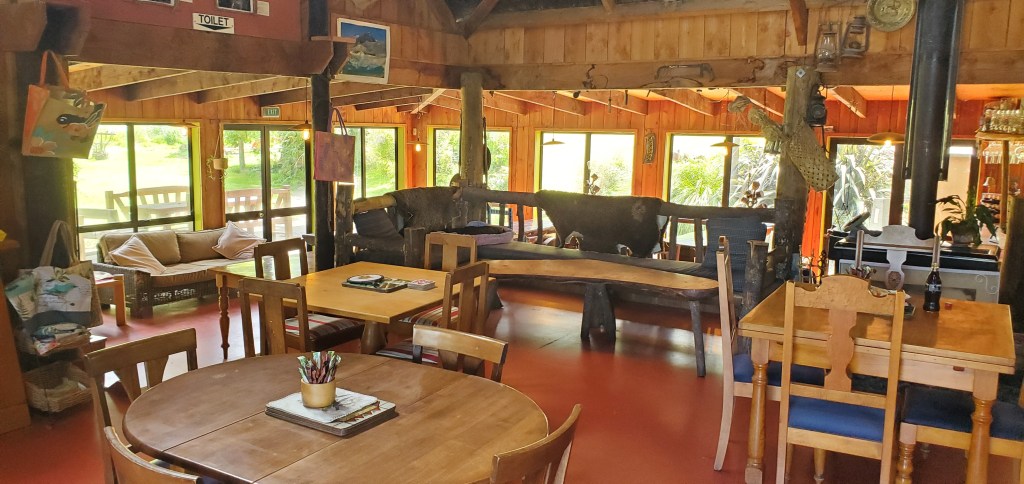
Rebecca was showing the slightest signs of being under the weather, but she was a trooper! The volume of water going over Haka Falls was amazing! This salty old motorcycle racer, Hank, was a friendly character and his place where we ate homemade vegetable and meat pot pies was equally eclectic.
We continued our way toward Rotorua and looked for a place for lunch. We saw a sign that said Thermal Valley Walk and it had a restaurant there, so we decided to stop there.
It was a rustic place with tools and memorabilia around the walls—roughly hewn wood table tops and old beer steins lined the shelves.
An older man was the proprietor and was quite a character–he had one eye that was a little wall-eyed and it gave him a look of amazement.
We ordered pot pies—vegetable and chicken and sat to wait for them. The place was vacant but for us, so he came and sat with us to chat and told us he had been a motorcycle racer and had raced in California and Nevada in the 90s. He owned the property here for 30 years and is now trying to sell it.
After lunch, we went on the walk through the steam vents. It was pretty and fascinating and full of surprising holes that emitted steam. it was amazing to be walking along and see steam shooting out of the ground from holes at the side of the path, It took about 30 minutes.
Rotorua
Then we drove on toward Rotorua and found our place.
Loraine is an older woman who is very grandmotherly and wants to take care of everyone and everything. She told us early on that she is 82. She has ornate antiques that look expensive and very breakable around the house—glass vases with gold edging and ornate figurines. She told us she and her husband had a large house filled with antiques, but after he died, she moved to this smaller house and bought a modern smaller furniture to fit it but kept some of her favorite pieces. Most are in boxes in the garage.
After we got settled, we talked a bit with her and then went out to a street she recommended called “Street Eats” for dinner.
We ate at a nondescript pub with outdoor seating next to other nondescript restaurants. There is a definite feel to these vacation destinations—Expensive food and signature cocktails seem to prove you are having a good time.
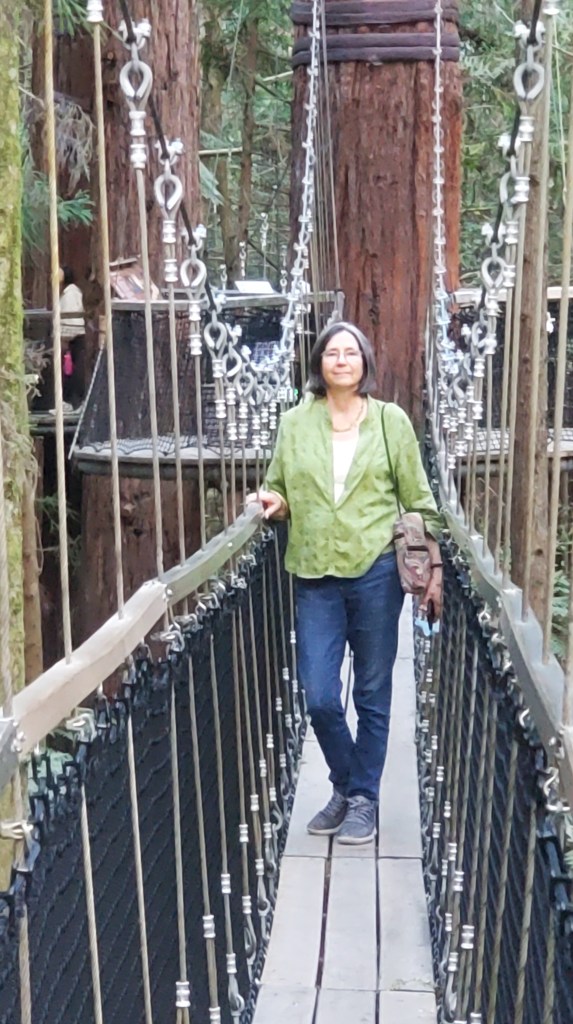
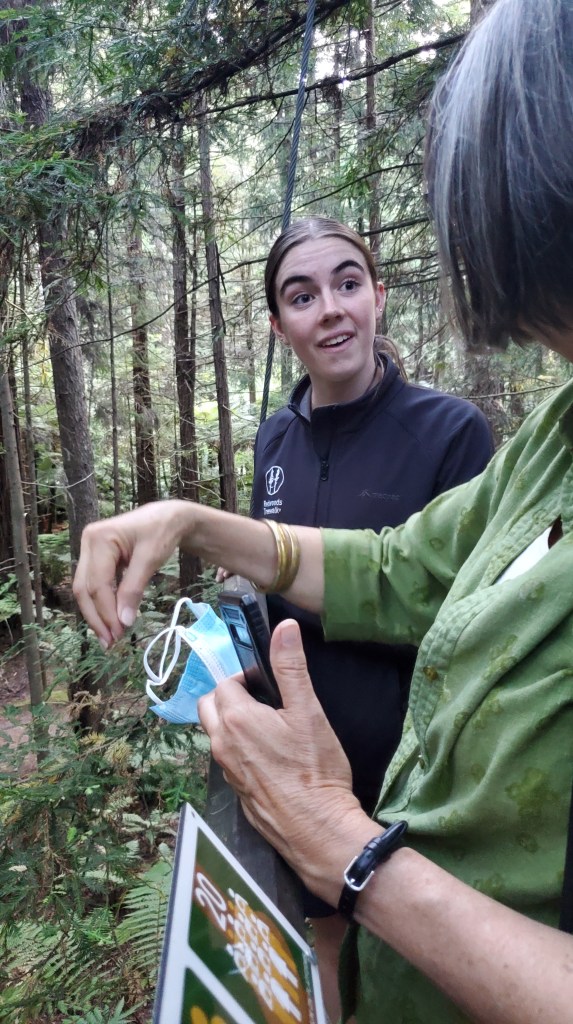
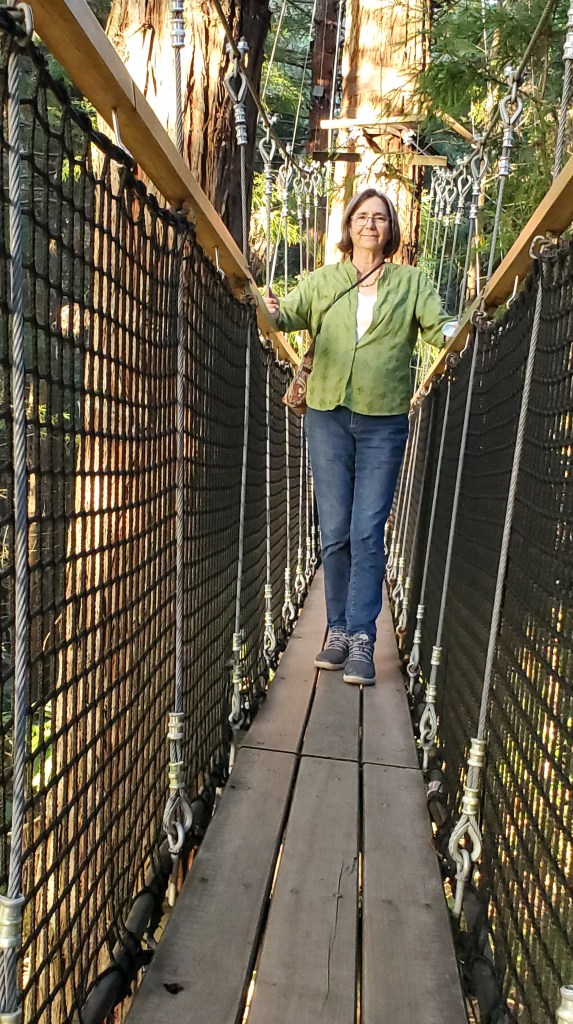
From there we drove to a Redwood Park—yes, a Redwood Park in New Zealand! It was planted in 1901 and has done well here. We are at about the same latitude south as the redwoods that grow north in California. They don’t get as much fog, but they get more rain which compensates for the lack of fog. The park has a canopy walk and so for a lark, we took it. The walk itself is older but the trees are much younger than the one in Eureka. It’s just about as high and as long as the tree walk we took with our friend Jerry in northern California. At night here, they had a light show, but it didn’t start for another hour and half, so we decided to take the walk approaching dusk.

We drove home and Woody went online to get tickets to the movie set for the Lord of the Rings called Hobbiton. There were just two tickets available for the next day but nothing else for over a week, so we signed up.
Lorraine suggested I take a covid test again and use one of her new ones. I have taken two over the last few days and tested negative and I haven’t had a fever. But I took it and it came out positive, so now I must let all the people we’ve seen know that they may have been exposed. I wonder if I got it from that man in in the office that ran the village for poor people in Fiji. He said he had strep, but now I wonder. I’m worried now about all the ramifications—where we stay, how to isolate, etc.
Hobbiton
Loraine had a beautiful breakfast for us at 6am because we wanted to get on the road by 6:30. She had an amazing spread of six homemade jams! She had been a nurse and was not worried about my contagious condition. She said she sterilize my dishes and asked me to put them in the sink. She gave me some better masks and stayed distant from me.
The drive west was green and fresh! I noticed that the Kiwi’s love trees. They plant them in rows as wind breaks or in orchard-like neatness to farm the timber. They line driveways with huge shade trees, and in some places they have them growing wild—like the rest of the world.
The closer we got to Hobbiton, the landscape changed. The hills are smaller and rolling and the farms were divided by hedgerows, some twenty feet tall! It was quite bucolic to see the neat rows of corn bordered by a trim of green hedge and the next plot over on tall grasses mixed with a yellow wildflower.
We followed the signs and got to the park early but not too early. I thought how fortunate we were that the only two tickets Woody could find for the whole time we are in this part of New Zealand were on the first tour out today. Serendipity rules!
We climbed on the bus to start the tour. I kept well masked and distant form everyone. This working sheep and cattle ranch was chosen for the set of the Lord of the Rings for it’s steep rolling hills and big trees. The first movie was filmed here (at least the Hobbiton scenes) and then the set was torn down because it was just put up with temporary kinds of buildings. But then when the second one was to be filmed, the landowner worked out an idea with the moviemaker to make it more permanent and developed a partnership to make this theme park. Starting the tour at a signpost, we followed our guide who told us interesting details as we passed. The house fronts the were sweet and cozy and were done with amazing detail, but just fronts. I know they are just props and sets, but well done. Most of the doors were round, built into the hillside. Chimneys poked out of the ground above the house, and each yard had accoutrements of the occupant—a small table with honey in glass jars for sale just outside a yellow door, or a carpenter plane and file with wood shavings littering the ground of another. The garden and flowers were amazing—I’d like to have a tour of that as well.
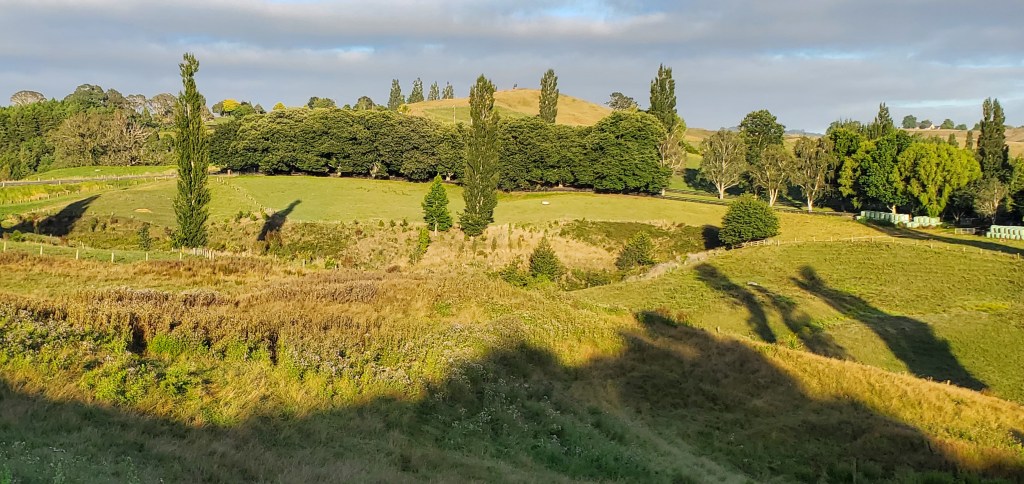
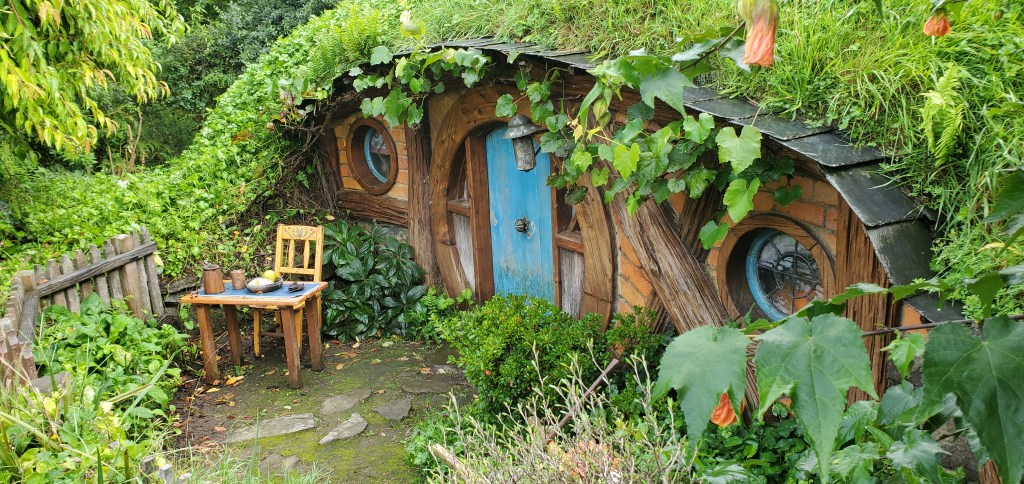
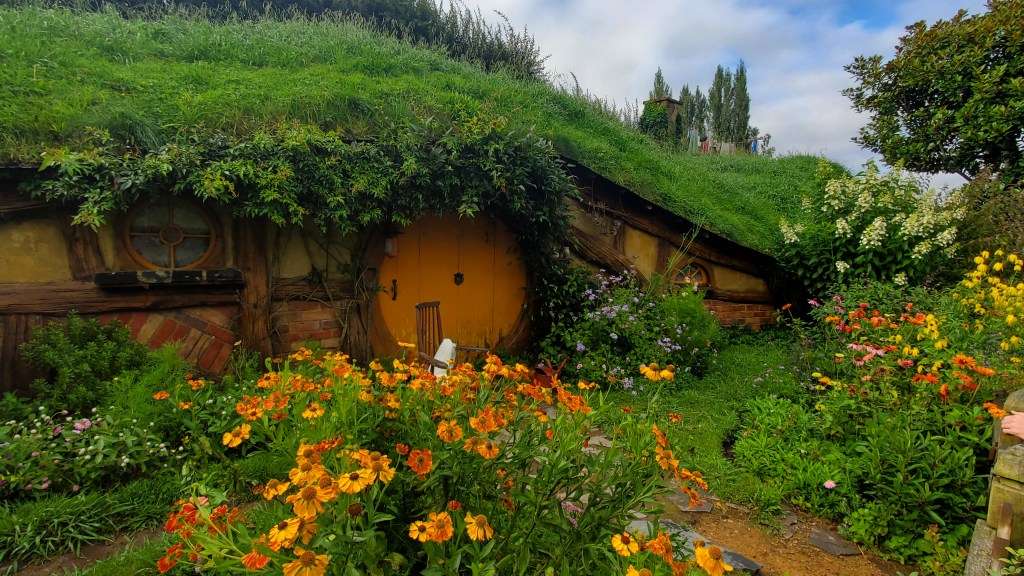
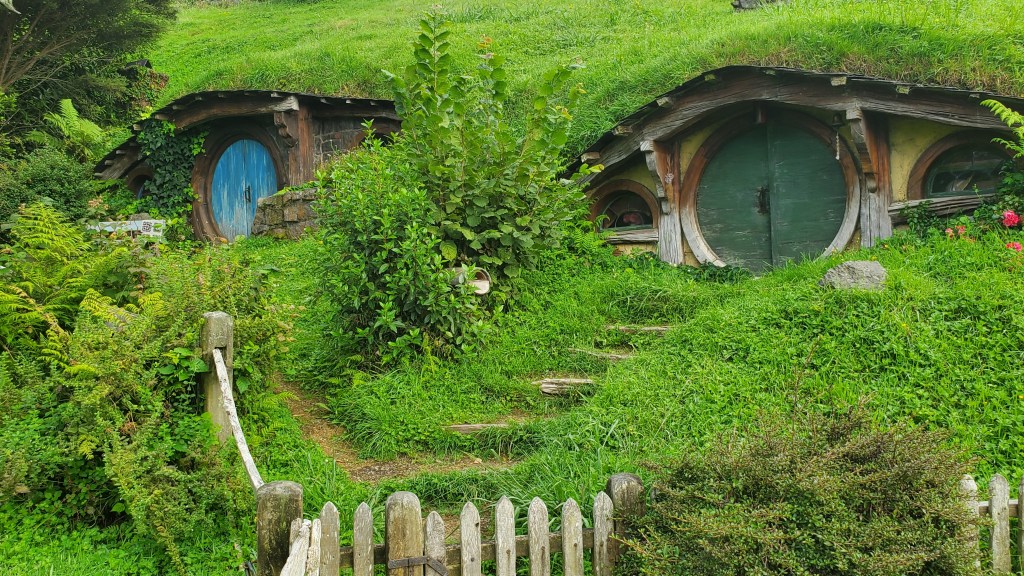
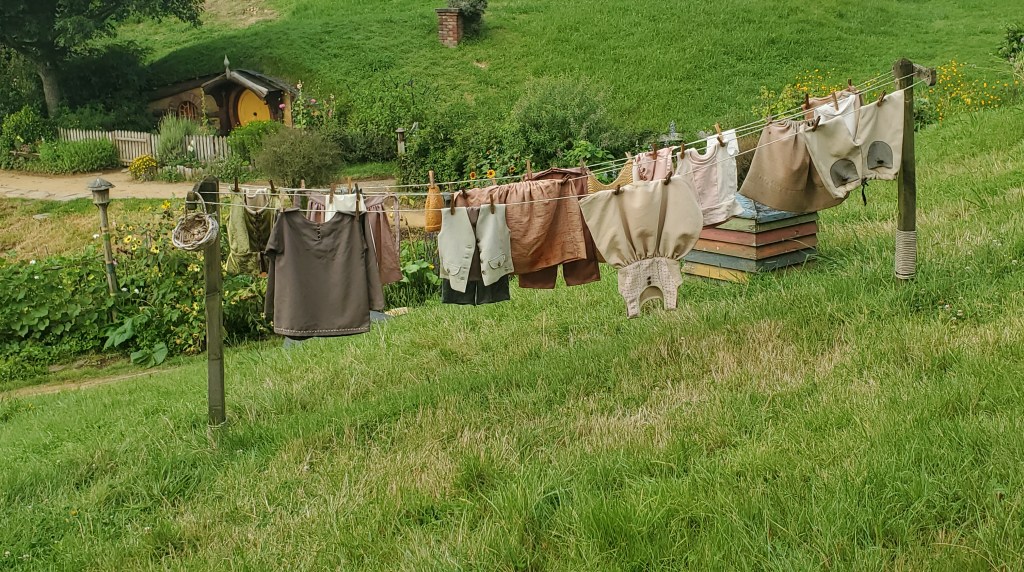
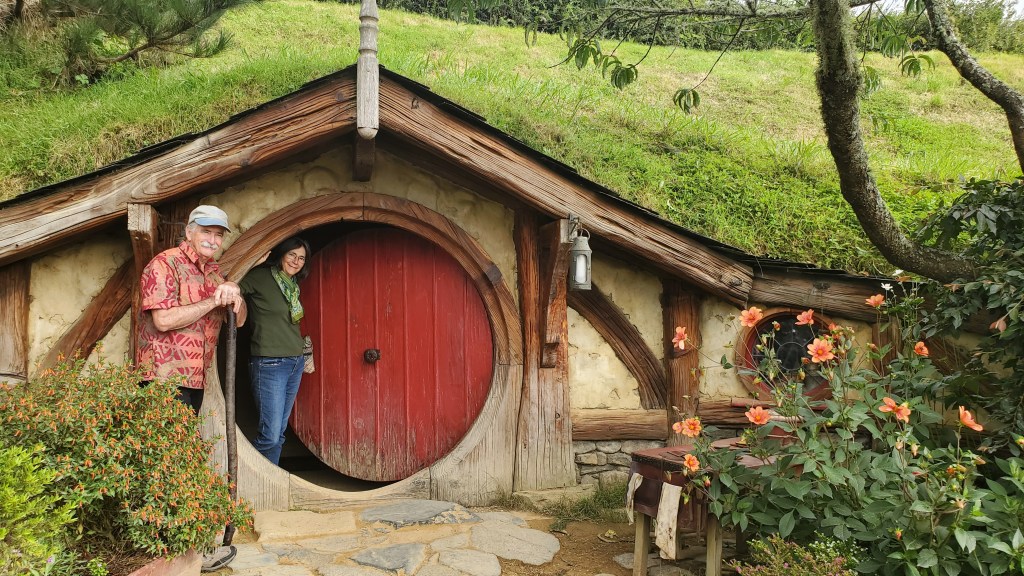
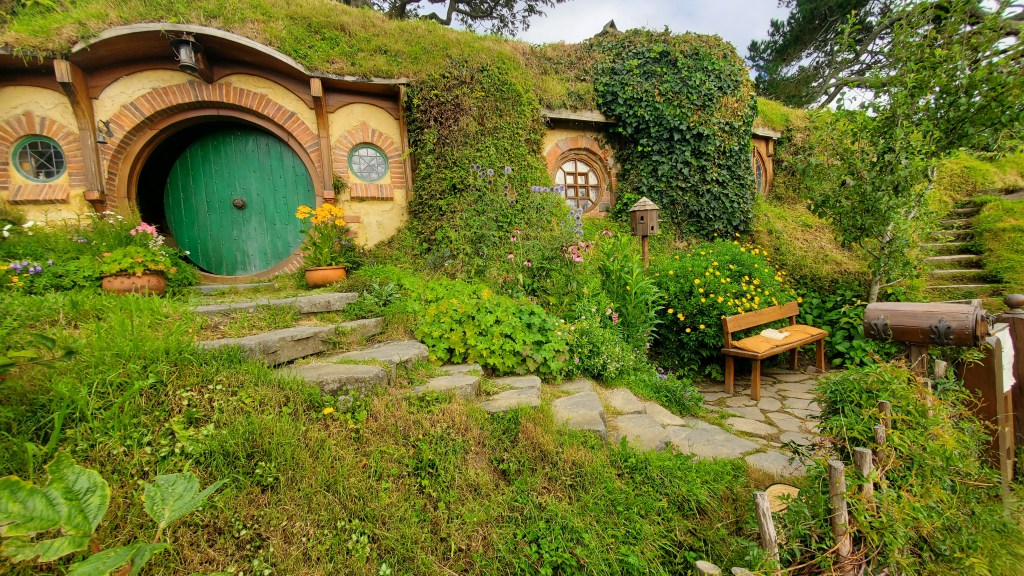
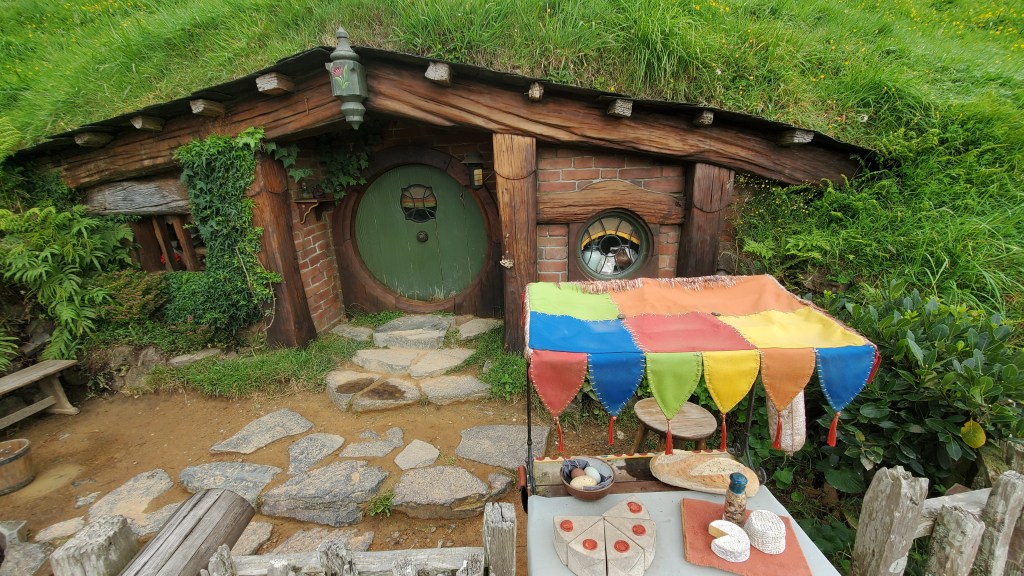
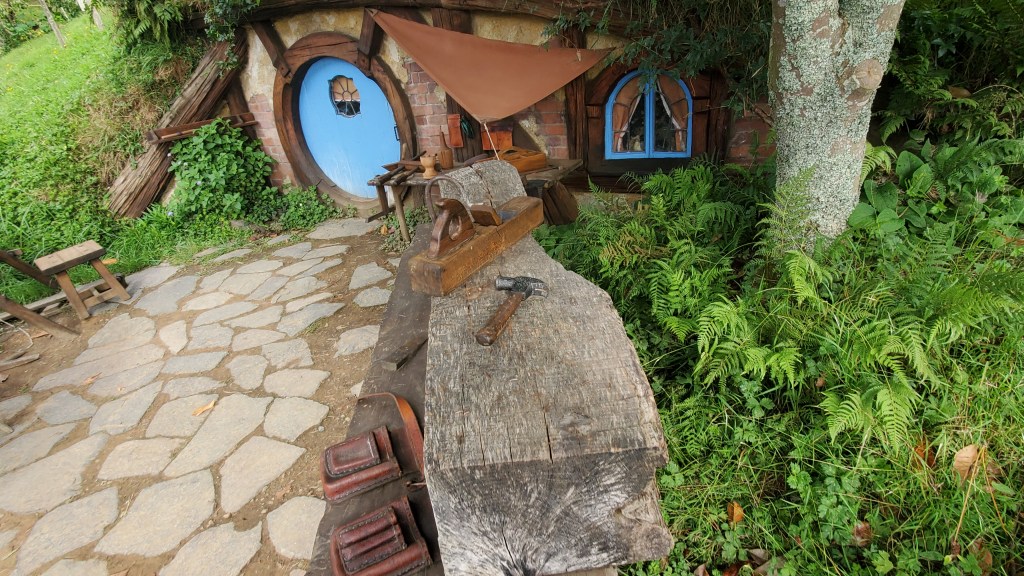
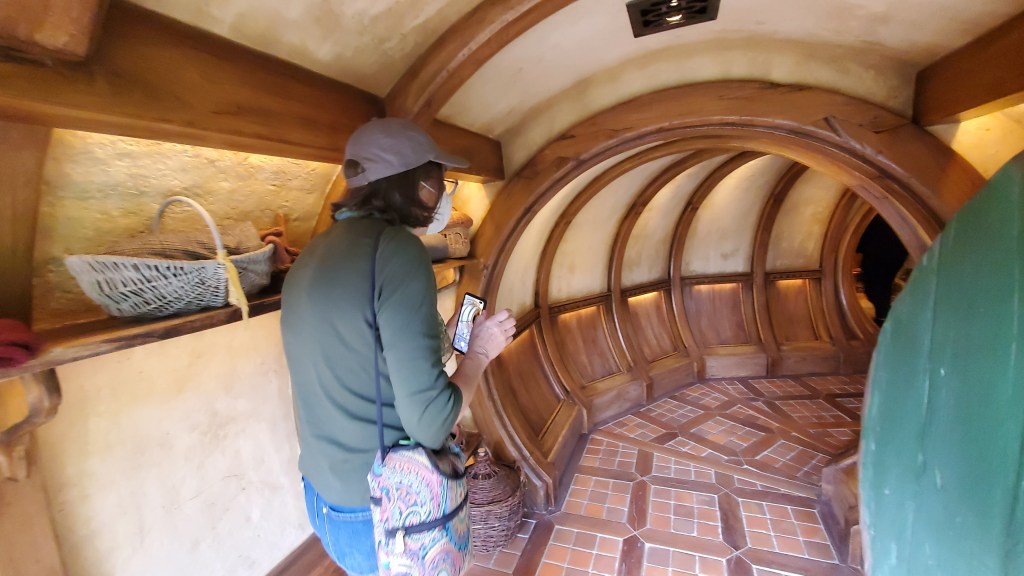

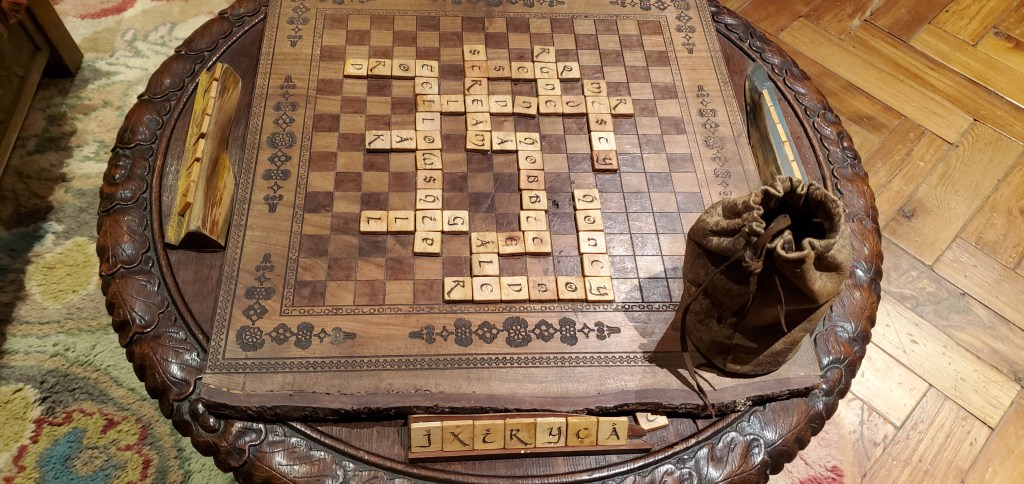
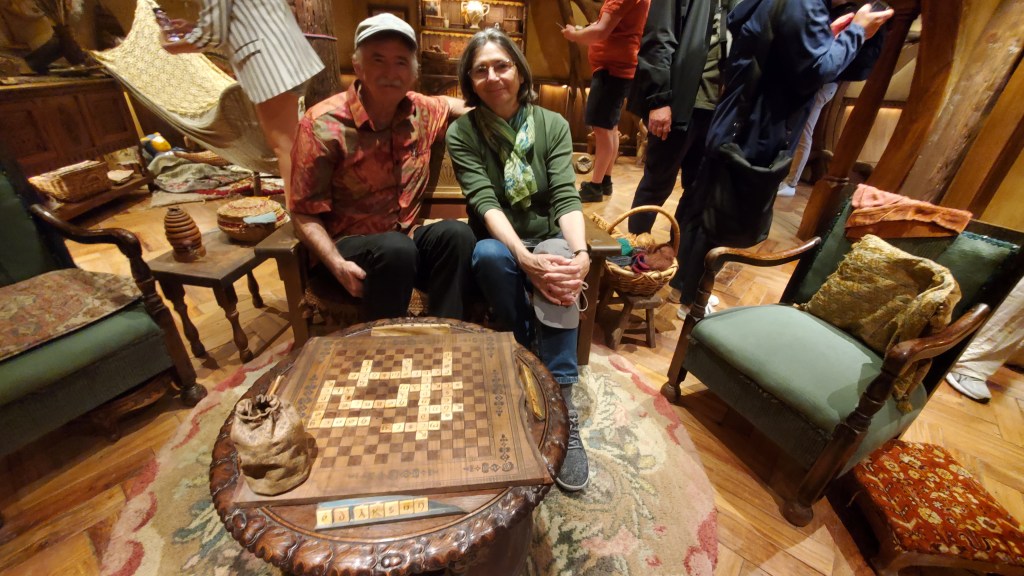
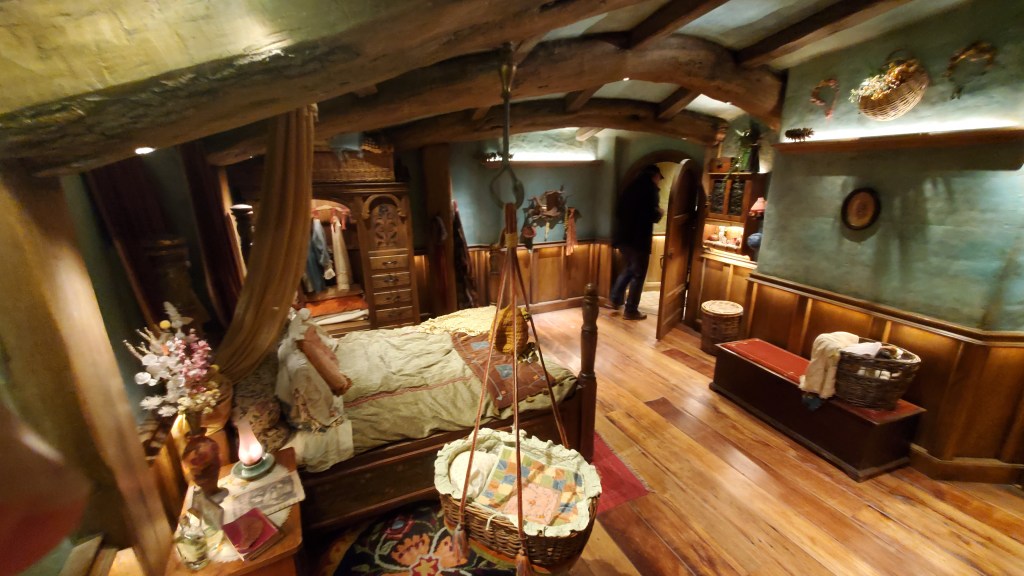
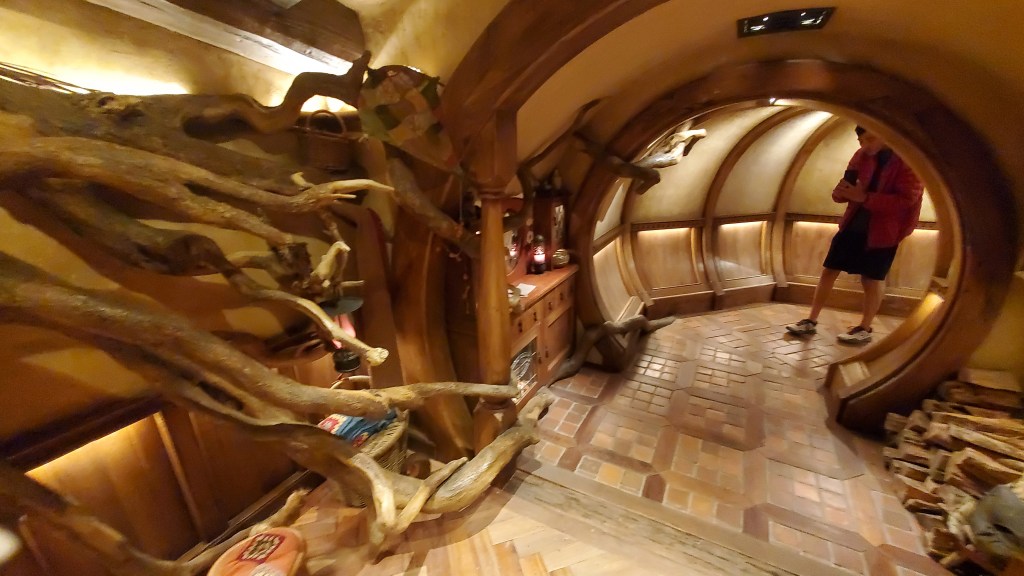
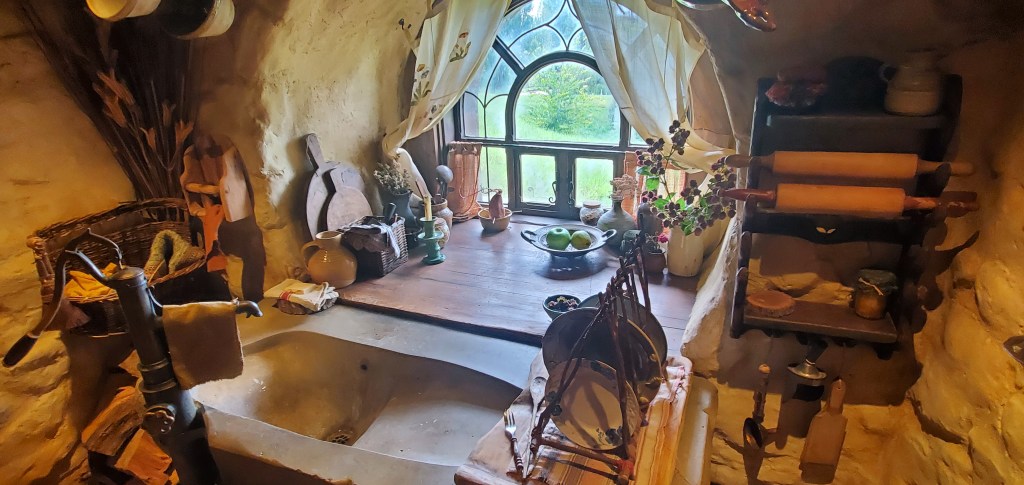
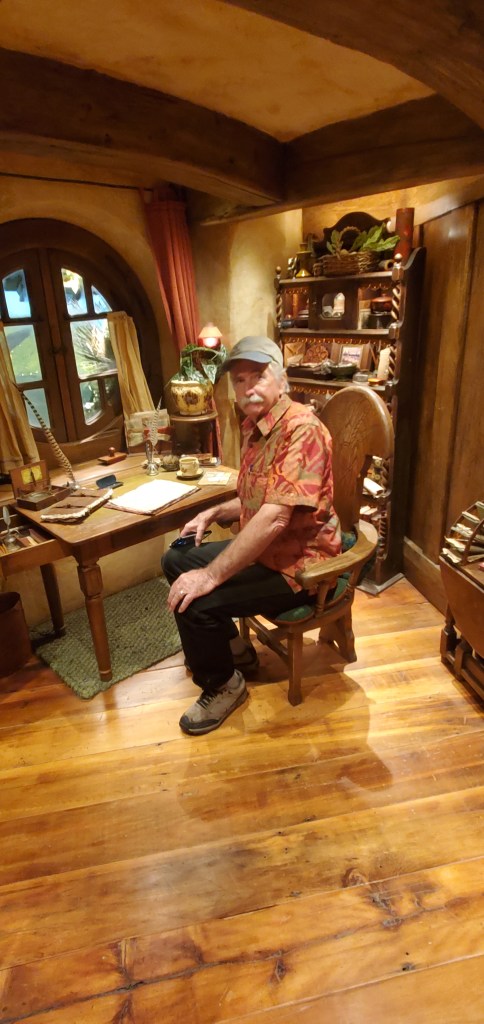

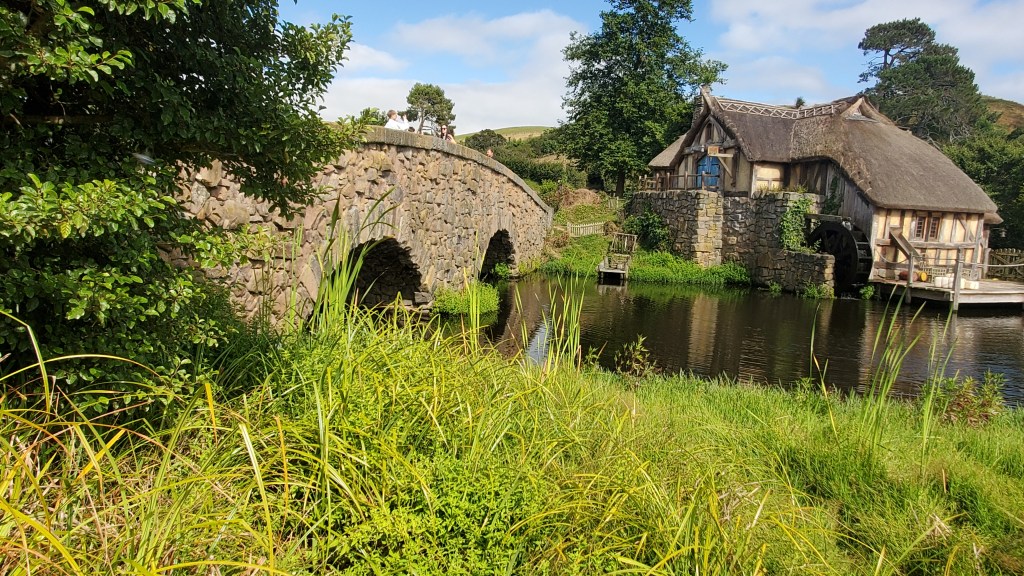
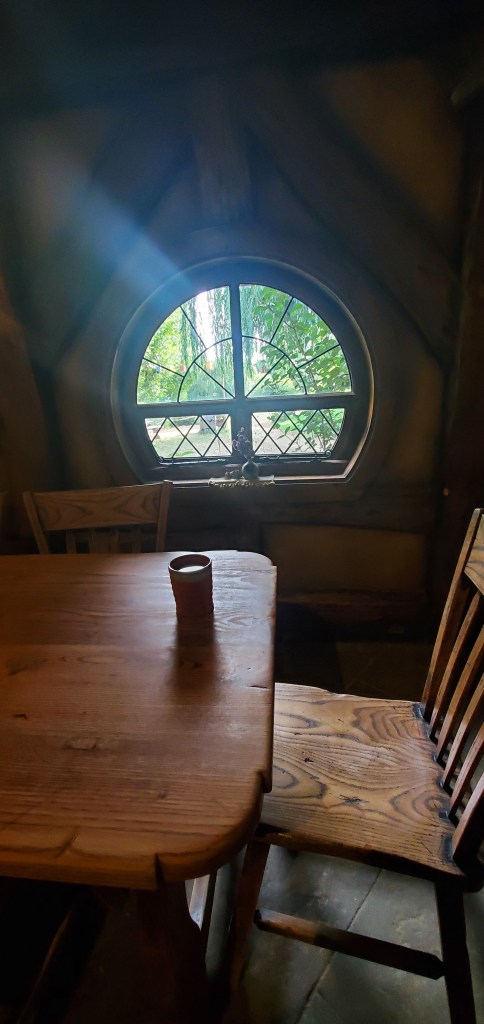
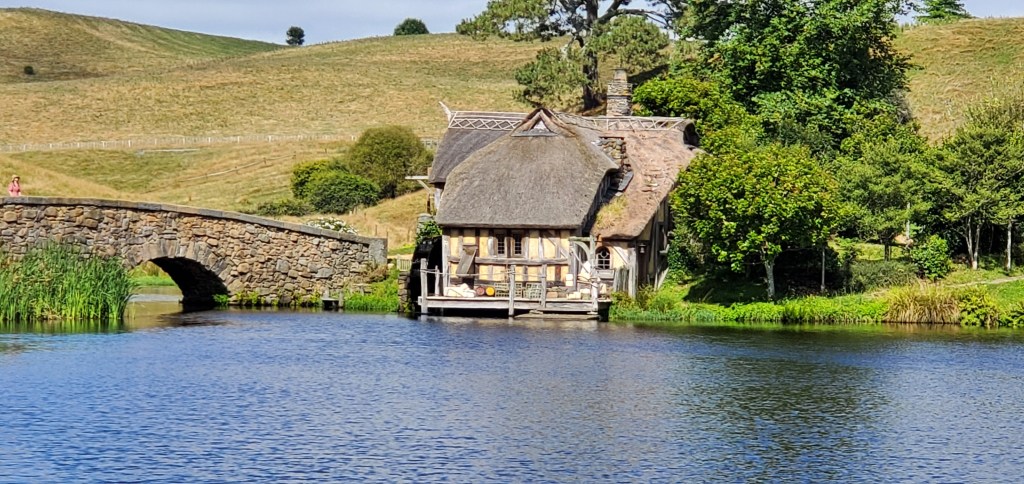
This was probably the most “touristy” thing we have done on this trip, so far. I wasn’t sure if I really wanted to go to a movie set and pay a pretty sizable entry fee ($75NZ–about $50US each)! As it turns out, it was a very enjoyable experience to be there. Our guide was informative and enthusiastic. I asked her, (Anesia, from Iceland) how she kept an upbeat attitude when she’s done the same tour and script hundreds of times. She told me that she really enjoys these side conversations and meeting people while we walk from one Hobbit house to another.
One thing the guide pointed out was that there are three sizes of houses—one full size the Hobbit actors use to make them the right size for the doors, one that was 60% size so that when Gandalf was filmed, it worked, and then recently there have added two houses with full interior rooms you can go inside and explore that are 80% of normal so that you can feel you are entering a Hobbit-sized space. It was cool to go in and look at al the props.
All in all, it was a fun experience, even though it was all from the movie set. It really did feel like the book was as important as the movie—One thing Peter Jackson had done—there was an apple tree growing, but in the book, it was plum so he had artists make fake leaves and fake plums and put them on the tree—all for less than a minute of the film—crazy!
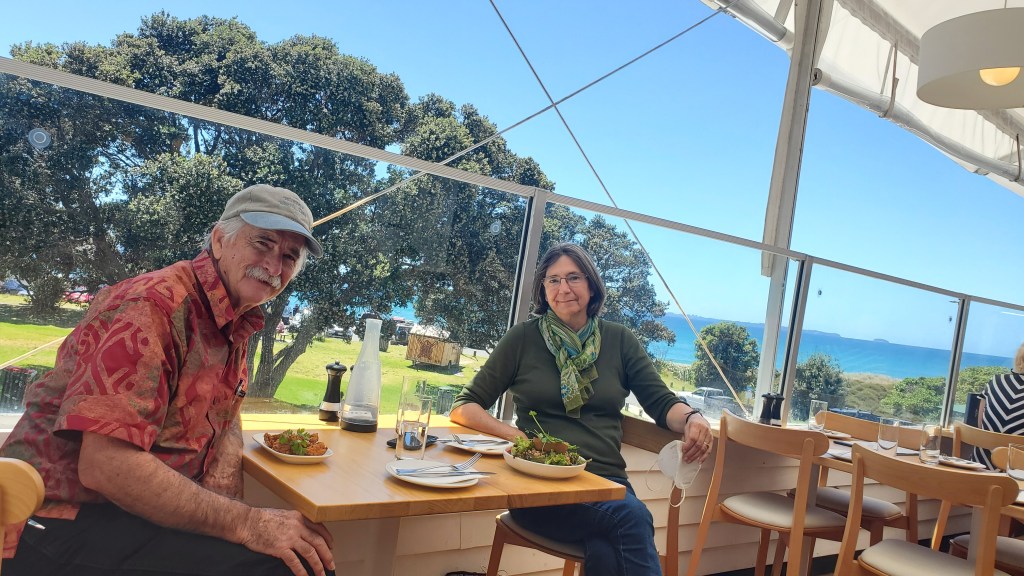
After the tour, we headed back on the way to toward Rotorua to a town on the water called Papamoa where we found an inn and restaurant that overlooked the water. We had a slow lunch in an outdoor seating area. It took quite a while to get our food. (They had warned us) and we sat in the sunny afternoon quite content.
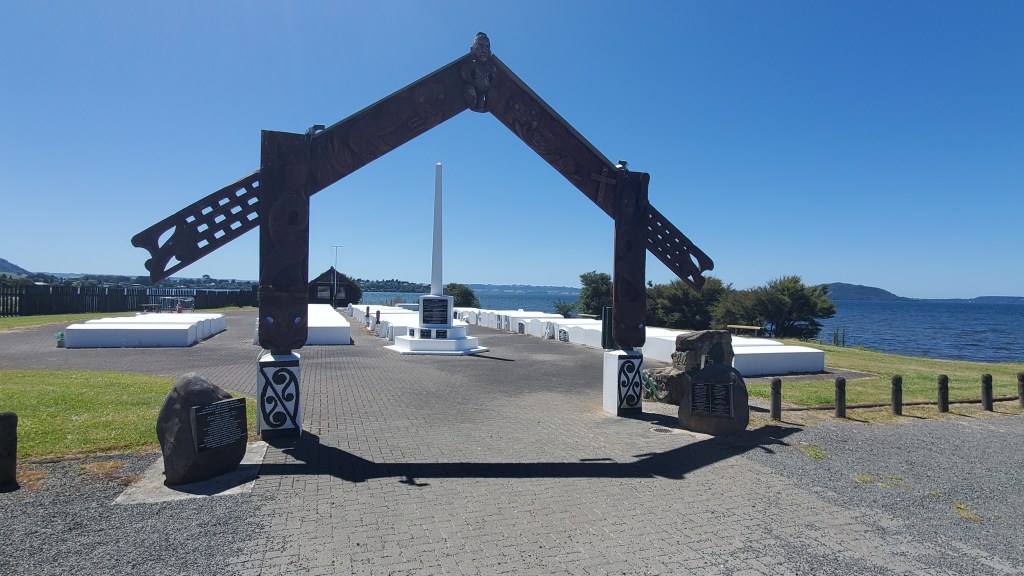
We drove down Highway 2 back to Rotorua and found the Marae village Lorraine had mentioned. We walked around and were amazed to see steam rising from vents in the grounds in random places. We took pictures of the church and the Marae buildings but didn’t go in.
Back at the house we found Lorraine doesn’t drink wine, but she gave us some glasses and we sat out on her patio and relaxed. She has some of the largest hydrangeas I have ever seen—the size of footballs.
We ate our bread and cheese and then I said an early goodnight. I even took a Benadryl just then so I could sleep away the Covid.
Lorraine had another big breakfast for us—hardboiled eggs, toast, fruit, yogurt, and lots of jams. She was kind and thoughtful during our stay. I grew to like her quite a bit. We didn’t shake hands or hug goodbye—my covid virus is still bad.

Once out of Rotorua, we drove some of the same roads we had the day before to Hobbiton. Once again, I noticed and wondered about the mounds and small hills that we passed. The look manmade, and I wondered what they were.
I also noticed the yellow brick houses in the region—the bricks vary in their yellow hue—some are buttery yellow, and others have a pinkish yellow (if that makes sense).
Hamilton Gardens
Lorraine had mentioned a beautiful garden complex in the town of Hamilton which was on our way, so we set our GPS for that and arrived about ten o’clock. We parked in the grass above the main (full) parking lot and walked to the entrance.
We were surprised to see that it is free to enter. They were doing some major renovations and remodeling, so it was a bit confusing to follow the layout. It is also very big.
We decided with the time we had that we should just visit one park, so we went to the section called “Themed Gardens.” In that part it was organized in several gardens within a theme—one was cultural—Japanese, Italian, Chinese, “California Dreaming,” Modern Art, etc. Another me was concept gardens, another was useful gardens—herbal, kitchen, etc. Very interesting. Almost more of an art installation, Woody said.
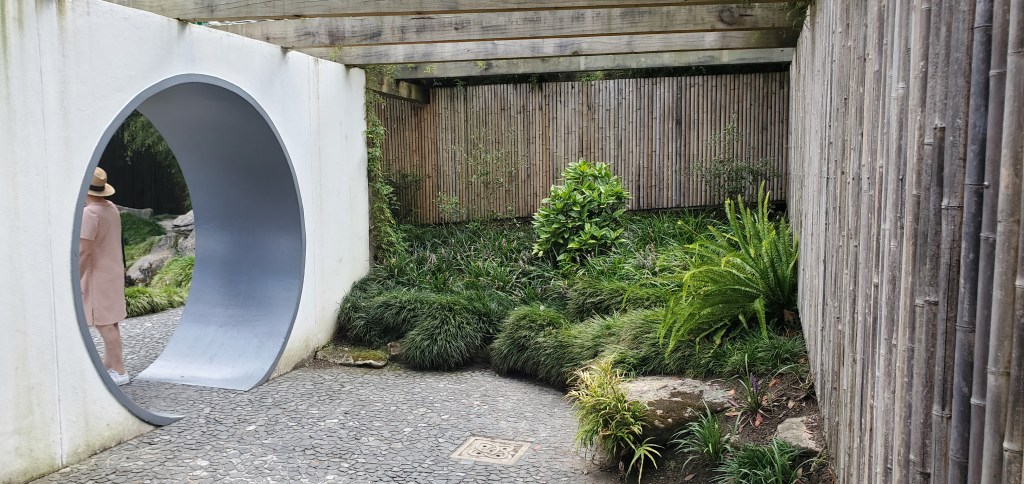
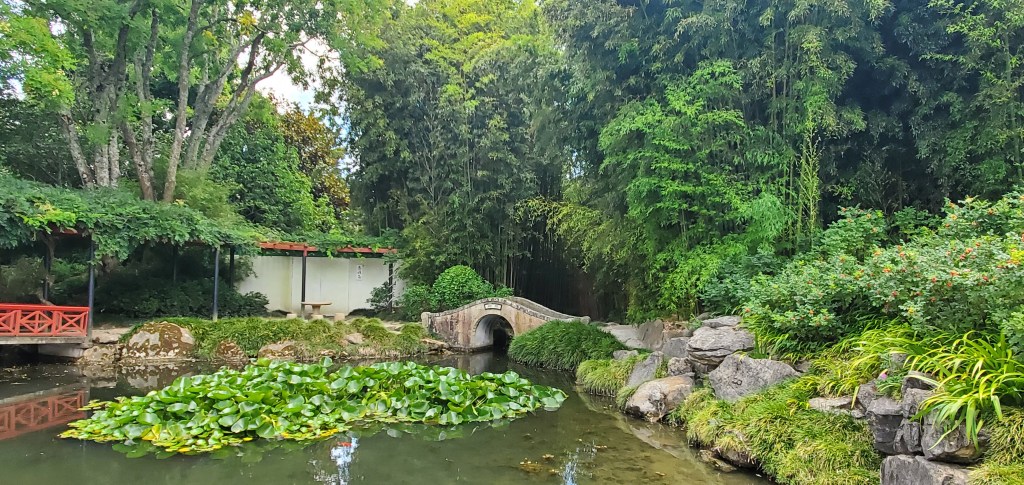

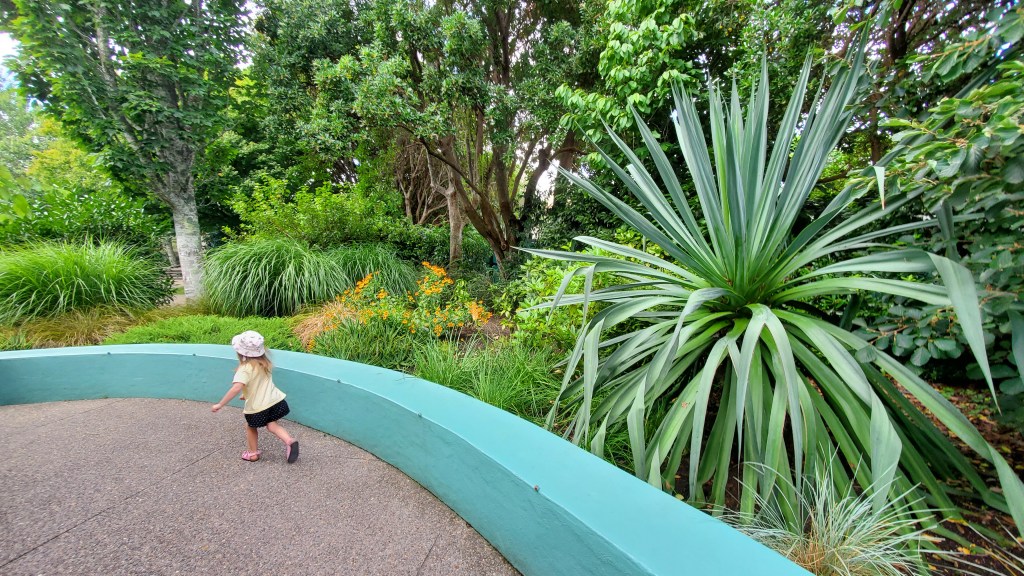
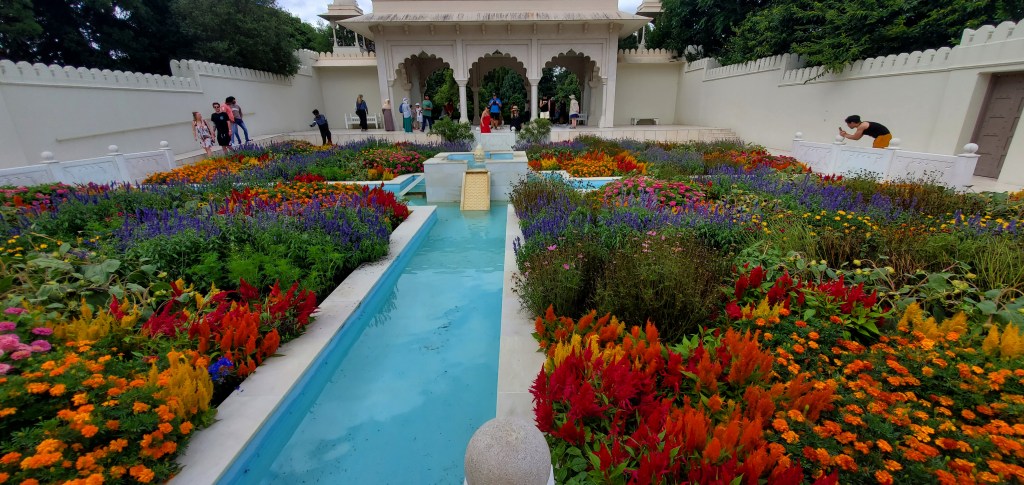
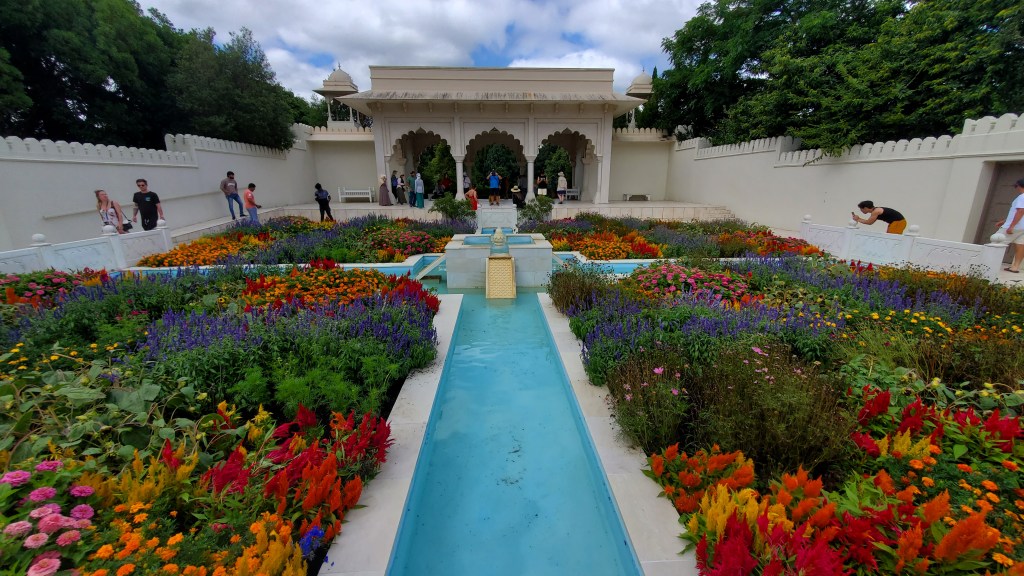
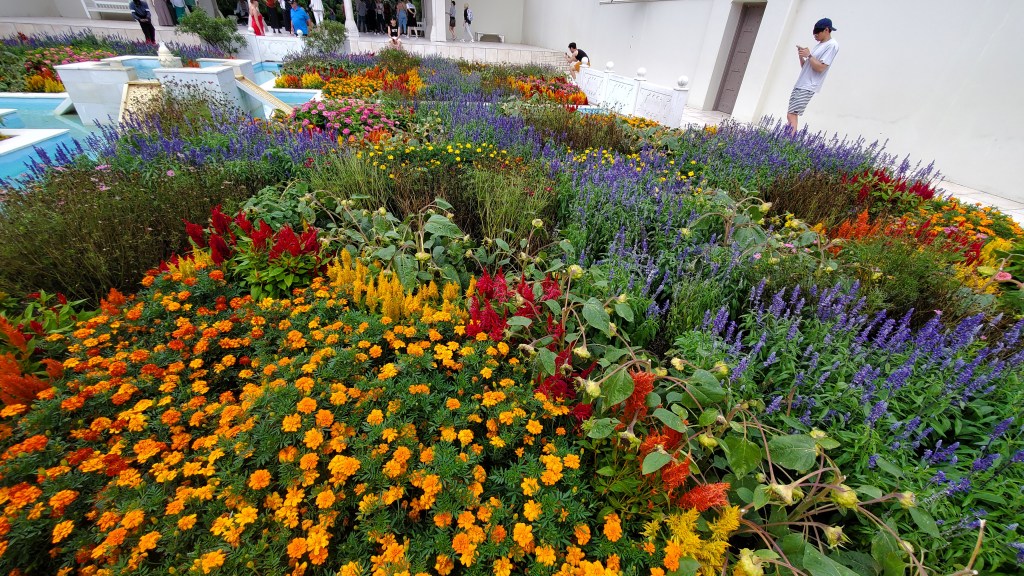
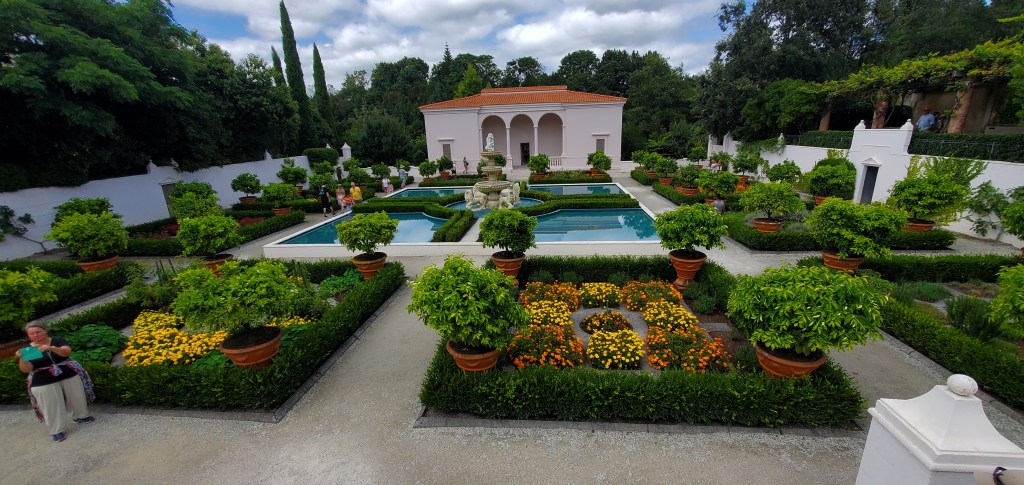
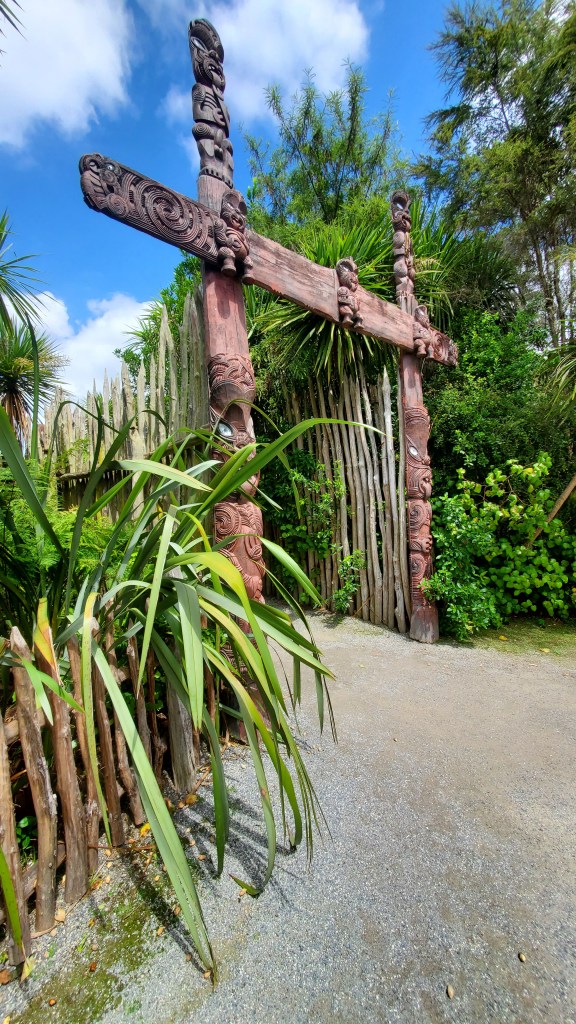
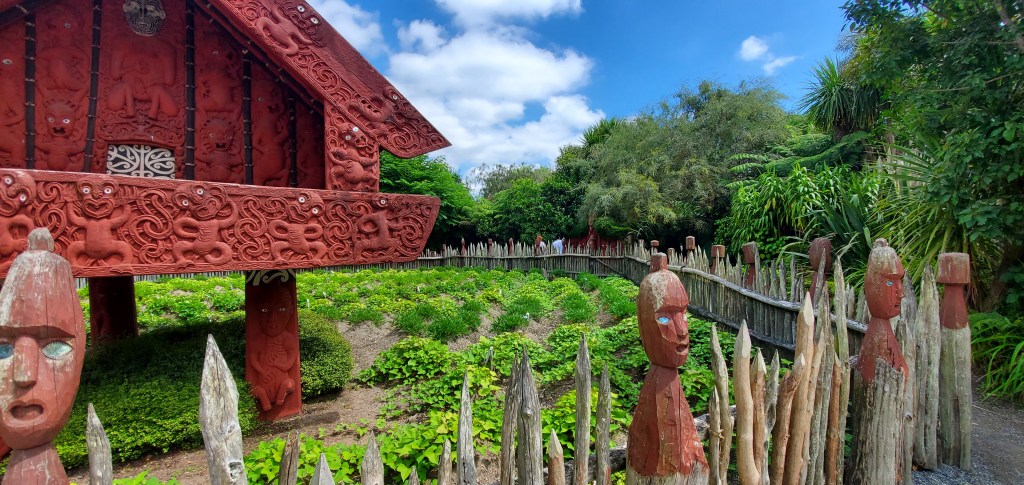
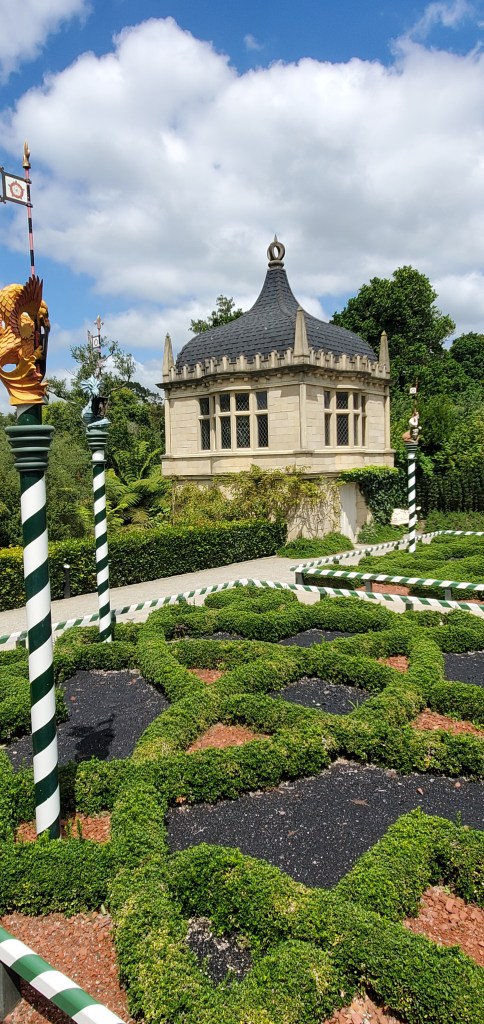
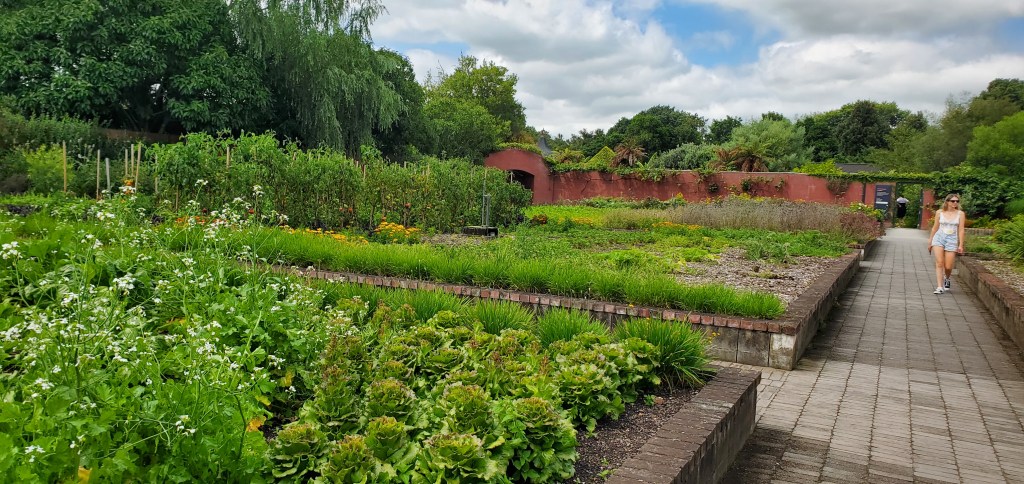
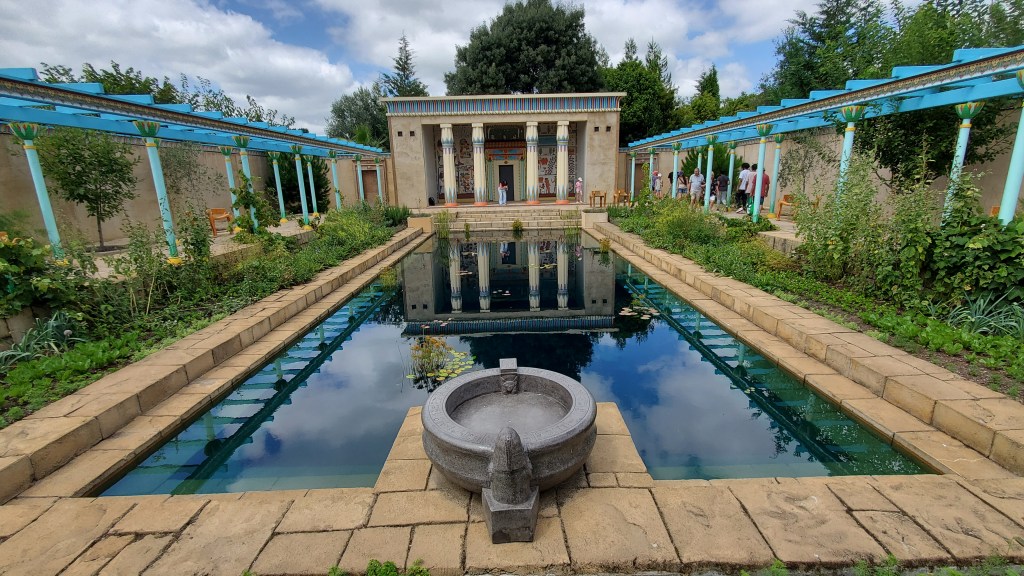
While a flower exhibit is lovely, it is not high on my list of things to do. But I must say that these gardens are probably the most impressive I have ever seen. Each section was based on a thematic and was amazingly well planned and executed. The entire park was exquisite!
We visited as many as we could, lots of lovely flowers and other plants. I would like to go back for more, but I probably never will.
We had a quick lunch in their outdoor café (I’m still testing positive for Covid, so I don’t want to do indoor things yet.) Then we walked around a small lake filled with ducks to get back to the car.
Auckland
We drove the rest of the way to the suburb of Auckland called Beach Haven. We are staying in a unit in the upstairs of a house at the top of the steepest drive I’ve every walked up. We are north of the city and across the bay. We have a lovely bay view, but the most sparsely furnished place we’ve stayed. Still, it’s enough and it is cheap! —Wayne is our host.
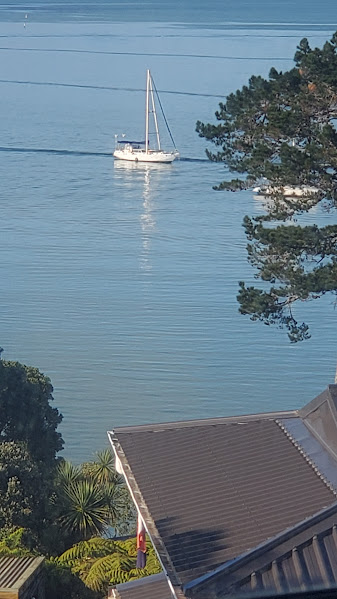
Woody did a load of laundry and I spent quite a bit to time on my thankyou post cards for people who helped with the Quiz Show in Winters.
I also went for a walk and discovered a public path between houses down to the tiny bay below us. There were a few people swimming and several dogs chasing balls their owners threw out into the water. I picked up some pretty, small shells and they then climbed back up to the road and continued my walk up another public walkway. Also, uphill further I was quite out of breath when I got to the top. Then I walked home—but still had to climb back up that same steep driveway.
I’m feeling better today. We slept in and got up slowly. There was cereal and coffee for breakfast and at about ten o’clockish we headed out on an exploration. We walked to what’s called a “dairy” that is a convenience store that also sells milk. That is the closest place to buy the card needed to ride the buses here—a Hop-On card.
We rode the bus for about 25 minutes to the bay bridge into Auckland city center. There are many tall buildings and on very high tower called the sky tower.
We weren’t quite sure where to go but we wandered up the bayside and then headed tow streets into the middle of the tall buildings. We ate lunch in a Korean dumpling house decorated in pink and green. Then we found a free art museum and spent some time there looking at some paintings of historical Māori leaders, some modern art, and various other paintings.
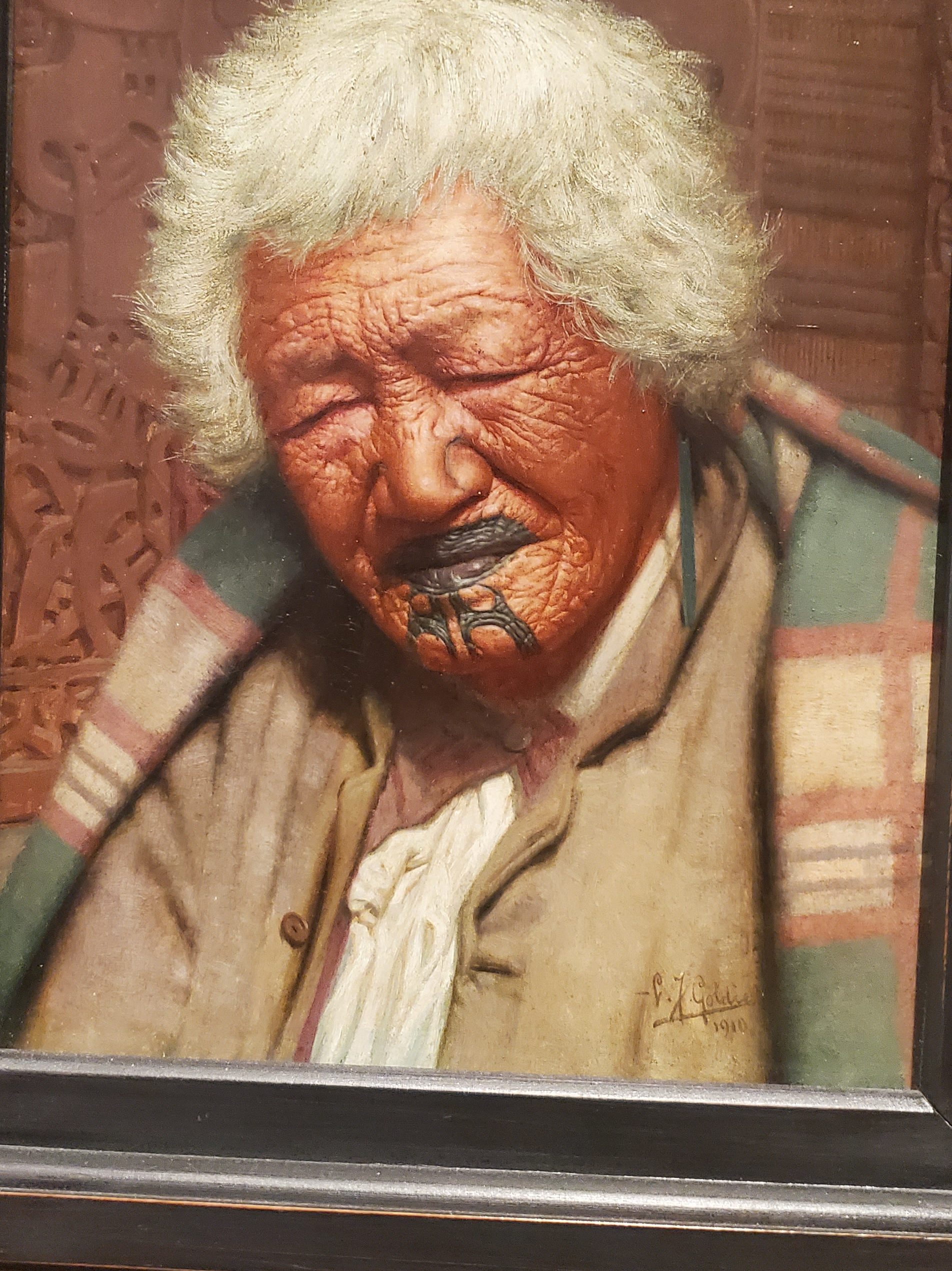
Kapi-Kapi, aged 102 in 1910 was a female healer, or tahunga. This oil on canvas was done by Charles F. Golde, and early documentarian of Māori culture. He paid his models a good fee for sitting for portraits.
After the museum, we found our way to the sky tower—it cost $39 each to go up, so Woody decided he didn’t need to go to the top. They had a kind of bungee free fall you could do for $239. We didn’t do that either. But we did sit across the street, sharing a mango smoothie, hoping to see someone jump, and we did. It’s not really a jump, more of a controlled fall. They are hanging from a brace between two guidewires that lets you dangle as you fall face first toward the target. Before you splat, something slows you down into a gentle glide. If you measured it by time, I think it costs about $20 per second!
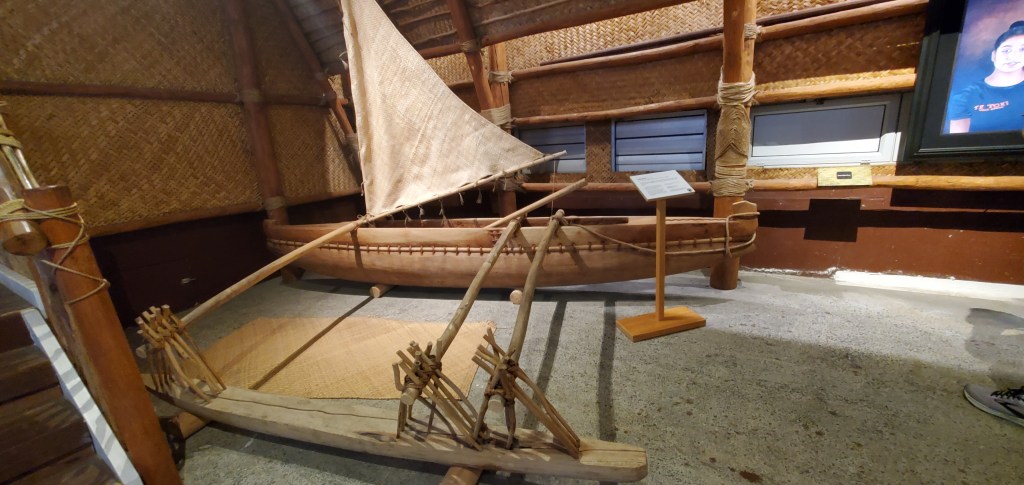
From there we walked to the maritime museum, which is also free, and learned a bit about the history of Auckland and how it grew. I learned more than I will ever remember!
For dinner, we ate early in the upstairs restaurant overlooking the harbor—Mr. Rudie’s. It was pleasant.
Then we took the bus back home, easy peasy—and climbed the hill to our place.
The next day, we got into the car and drove across the peninsula to meet Penny and Jeff at a place called Takapuna Beach Café. We got there a bit early and waited for them to get there. We had a table out on the veranda where we could look up at the beach and high rocks. Penny and Jeff treated us.
Penny was an administrator at UCD Medical School, and Jeff was an anesthesiologist.

Penny grew up in this community and her parents still live here. She spends three months of the year caring for them, and her other siblings take up the rest. (Her parents are 92 and 96). Jeff, like me, is getting over Covid—he tested negative today!
After brunch, we walked up the beach and back. Woody hung out with Jeff and Penny and I talked. I really didn’t know them that well, but they are kind, open people. They gave us more ideas of things to do and see and we made tentative plans to see them Saturday. They went back to their house, and we decided to go north of Auckland for an afternoon drive.
The countryside was green and changed every few miles—flat, hilly, rugged, and flat again. We stopped briefly at a beach to stretch our legs.
Woody saw a sign for a hike; it said Dome Forrest Viewpoint hike. It sounded interesting so we decided to park and hike. It didn’t say how far, but how far could it be? We first had to go through a gate with a sanitization brush and sprayer to prevent some disease from being carried into the park. We climbed stairs and followed a steep path.

Our walk was beautiful, but the buzzing of the insects and birds was deafening. I guessed it was about 100 decibels or so. It reminded me of the new fire alarms that were installed at Shirley Rominger Schools, a couple of years before I retired.
It was hot and a little treacherous in places, but absolutely stunning—there were name tags for many of the plants and trees we saw. We didn’t have water and we had hiked almost an hour when I had the bright idea to use my GPS to see how much farther. We weren’t even 1/3 of the way! We both had thought we could go up and down in 20-30 minutes. So, we decided to turn around. We will never see the Dome Forest View, but we did see a lot of the forest.
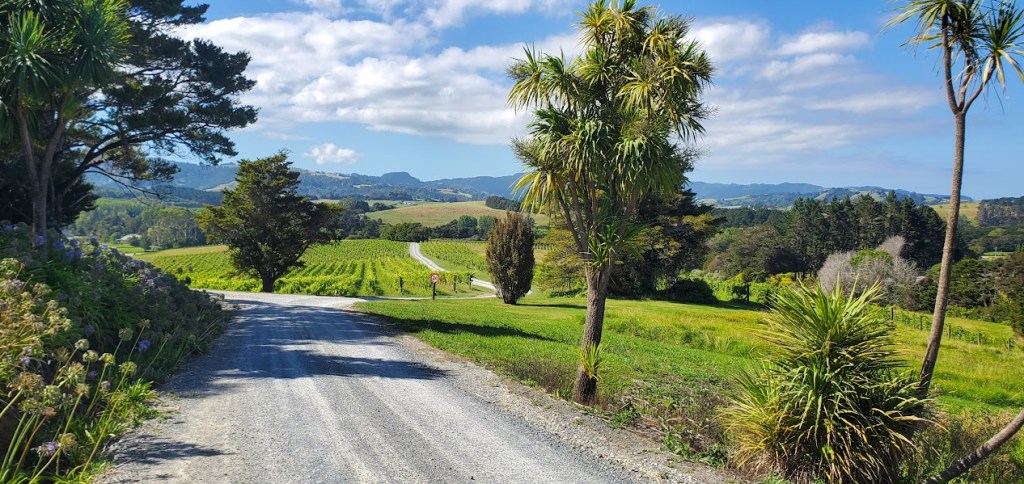
Back in the car, we headed back south a bit because we realized we had missed a turn to our planned goal—a winery we had heard of, Matakana Estates. We got there about ½ hour later and drove up a long driveway lined with grapes. It led up to a modern barn-like building where we parked the car.
The woman who greeted us was helpful and we ordered two flights—I ordered the wines made there which were Chenin Blanc, another white, a rosé, and a Syrah. Woody ordered a red flight that had some reds from Hawk’s Bay. I didn’t care for the whites much—one tasted salty. Woody enjoyed all of the reds.
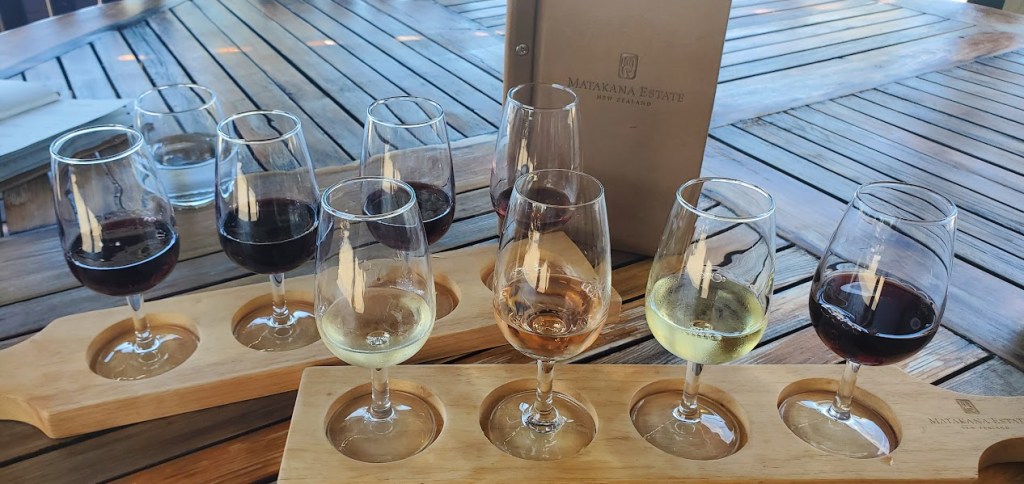
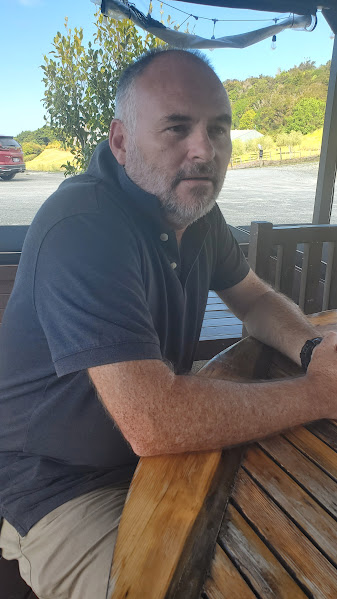
The winemaker came out to talk to us after Woody mentioned that he worked in the industry. (They don’t give discounts for that here.) His name is Richard. We had a pleasant conversation about wine and such, then he left, and we finished the tasting.
From there we headed home, back the way we came and in Beach Haven we stopped at an Indian Take Away. We have enough food for three dinners, I believe. All in all, it was a good day.
The next day, we took the bus downtown and then a ferry over to Devonport, an older seaside town full of Victorian cottages and large trees. We had lunch in a small café—we shared a tomato soup and toasted cheese sandwich. We spent about an hour wandering around.
We took the ferry back and then walked around a bit until it was time to meet up with our walking tour. Our guide pointed out some old buildings—the ferry terminal was designed based on the SF Ferry building. We walked up to see some average looking street art and a couple historical buildings—not much really. He showed us where the suffragette movement started. New Zealand was the first country in the world that allowed women the vote back in 1893 and they have decorated the square to commemorate that.
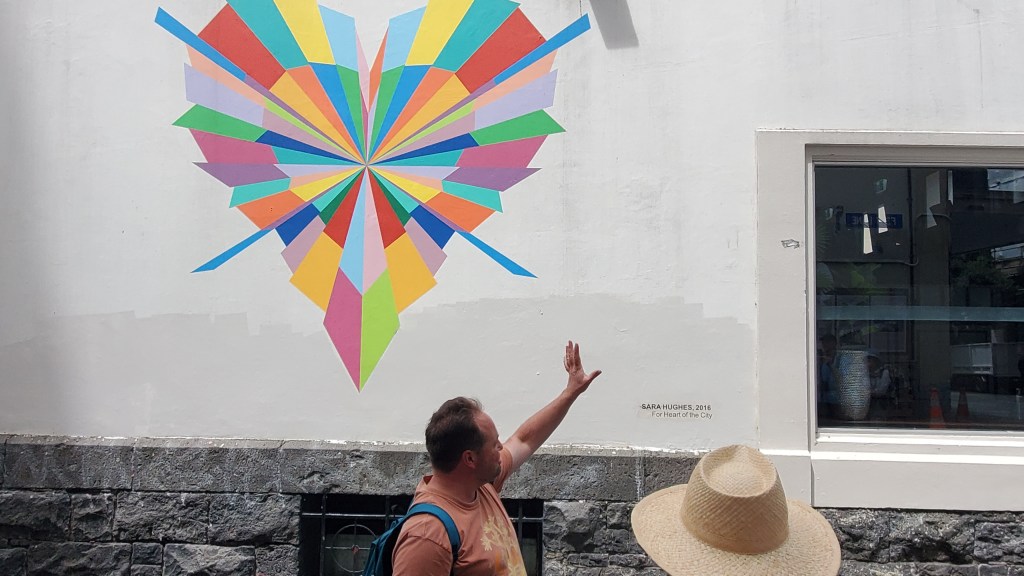


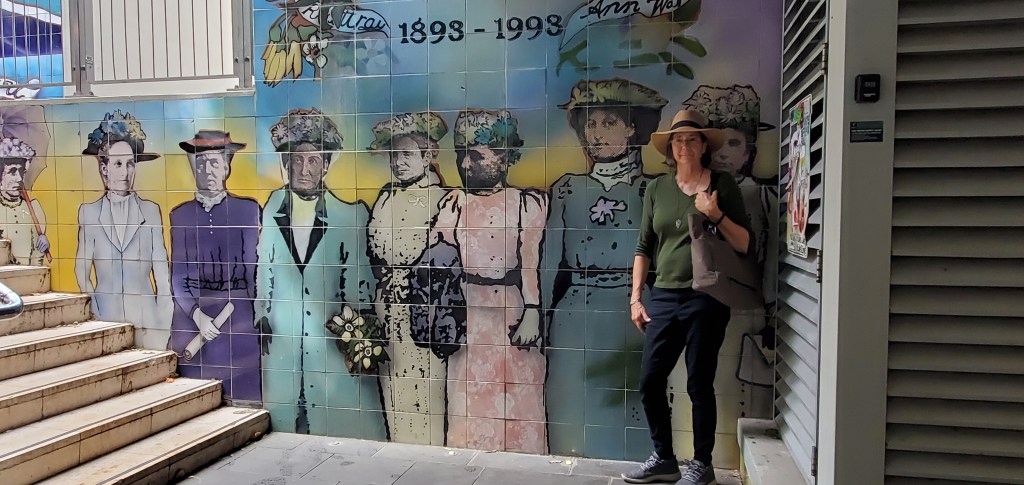
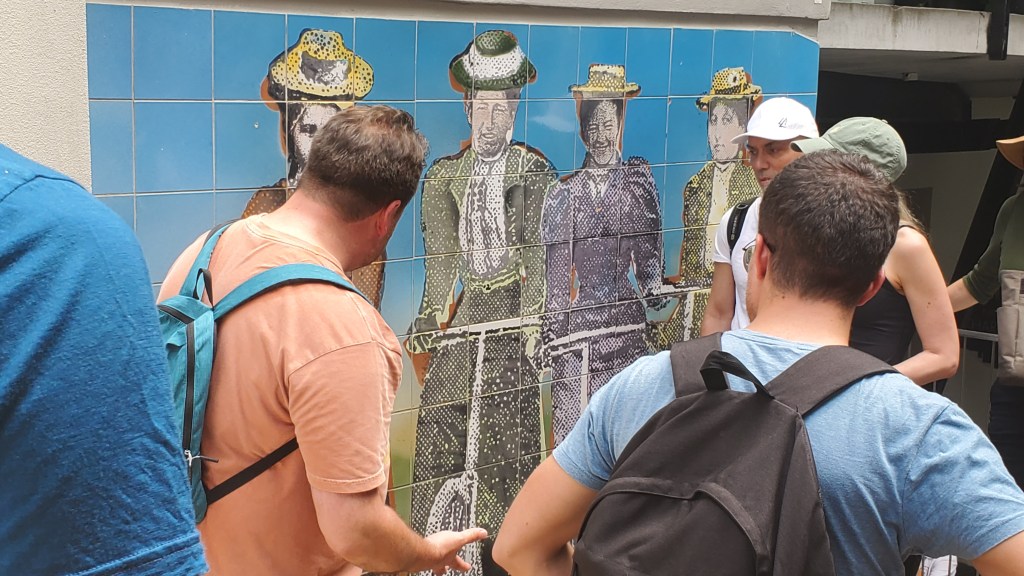
As many people know, New Zealand was the first place to grant women the right to vote. It was women who circled the nation on bicycle (in long dresses, apparently) gaining the support of the nation in September of 1893. The Women’s Christian Temperance Union partnered with trade unions from the early 1880’s to push this through, way ahead of any other sovereign nation. Our tour guide showed us many murals that celebrated this event.
We walked through a park with some wonderful trees: Kauri, Totara, Puriri, Tikouka, and Pohutukawa. Then we toured the university campus with its handsome bell tower.
We decided to end the day in Auckland downtown with a drink at a rooftop bar at the Vinco. We sat across from the sky tower, but I think it was closed this time. We enjoyed the view for about 40 minutes, then walked back to the bus center. On the way, we stopped at a grocery store for some fruit, milk, and apples.
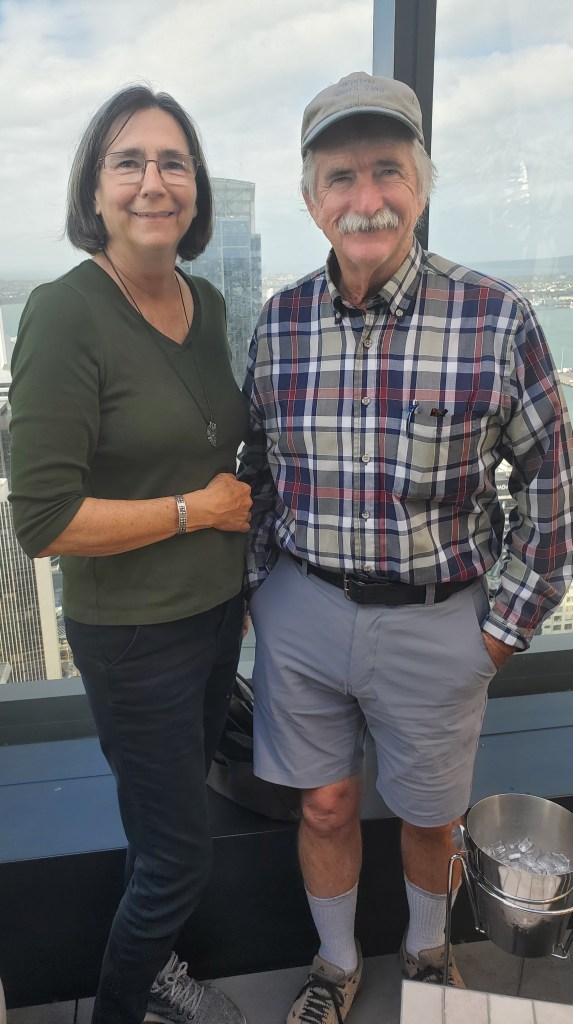
The view from the Vinco Rooftop bar was as nice as the Sky Tower, I reckoned, and the cost of two glasses of wine and the nibbles was half of the entry fee to the tower! Win/win! Rebecca took her mask off just for the picture.
We had leftover Indian food from the night before. We watched the Piano which takes place in New Zealand in the 1870’s. Much of it was hard for me to watch because of the violence, but it was a good story.
We had a lazy morning the next day. We were planning to meet Penny and Jeff, so we read and wrote and cleaned up the place. Woody worked on getting our trip to the South Island buttoned up.
At about 12:30, we went to meet them at a place called the Sugar Mill. It is still the biggest sugar factory in New Zealand. It is on the water fairly near the bridge that crosses over to the city. They have made a lovely park around it with a large park and play equipment for kids. Everything is pink and lime green—a bit much. They had a small museum that talked about the history and the kinds of sugar. The cane is all grown in Fiji and shipped here for processing.
We ate outside—I’m still testing positive for Covid. The waitstaff was very slow but it didn’t matter because the point was to visit. I think we took two hours for lunch. Then we followed them to a nature walk because Penny wanted us to experience the bush. Really, it’s more of a jungle than “bush” to me.
Again, we had to sanitize our shoes as we did on the long hike yesterday, but this was mostly on a boardwalk to protect the flora. They pointed out the tall kauri trees used the Māori for boats and houses. The trees grow straight with few branches, but they are slow growing. They were cut down en masse by the Europeans for buildings an so now they are a protected tree.
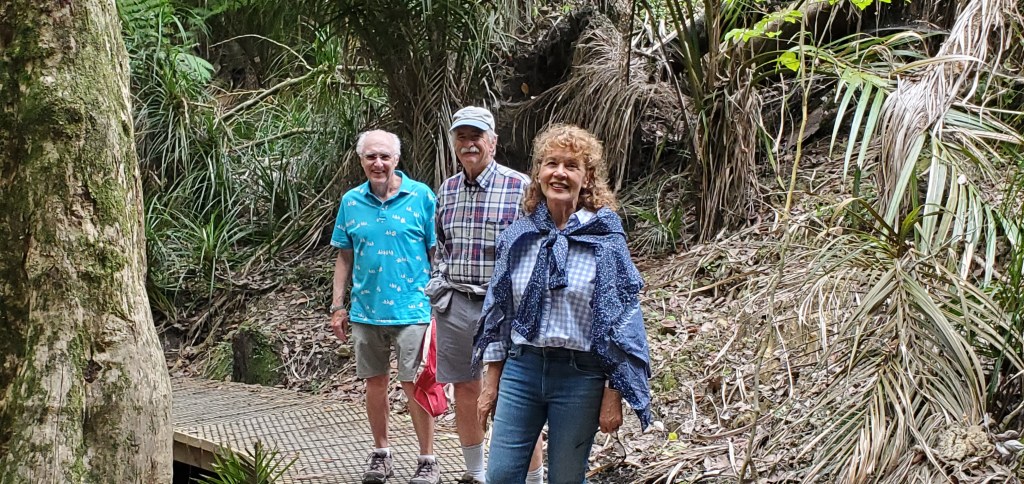
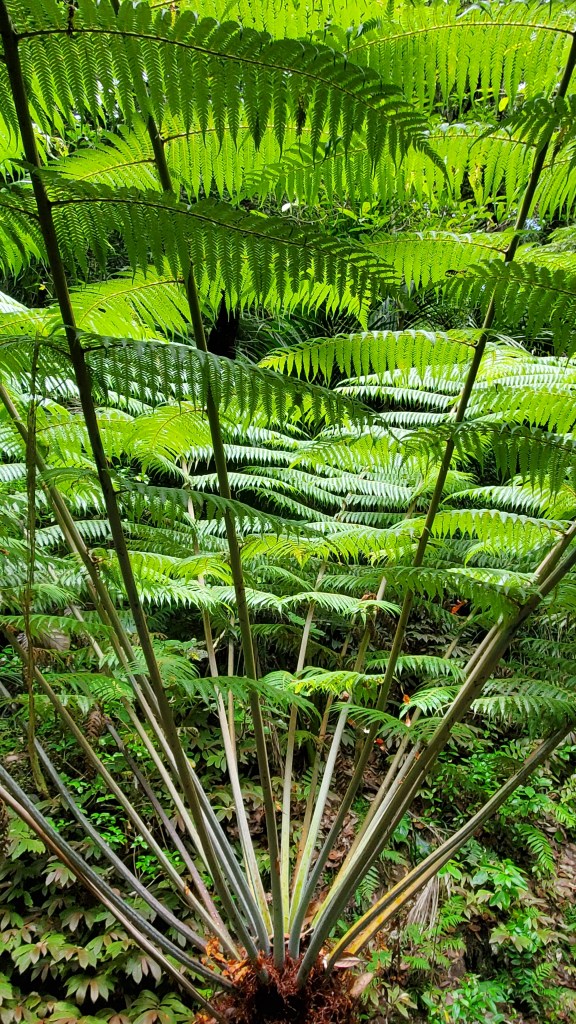
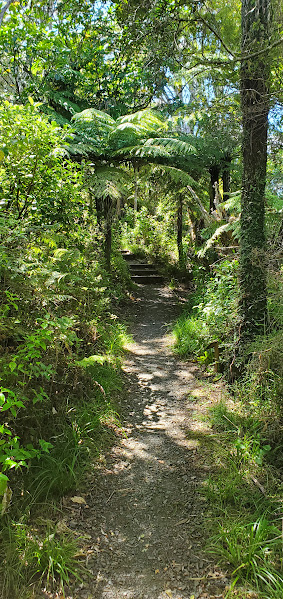
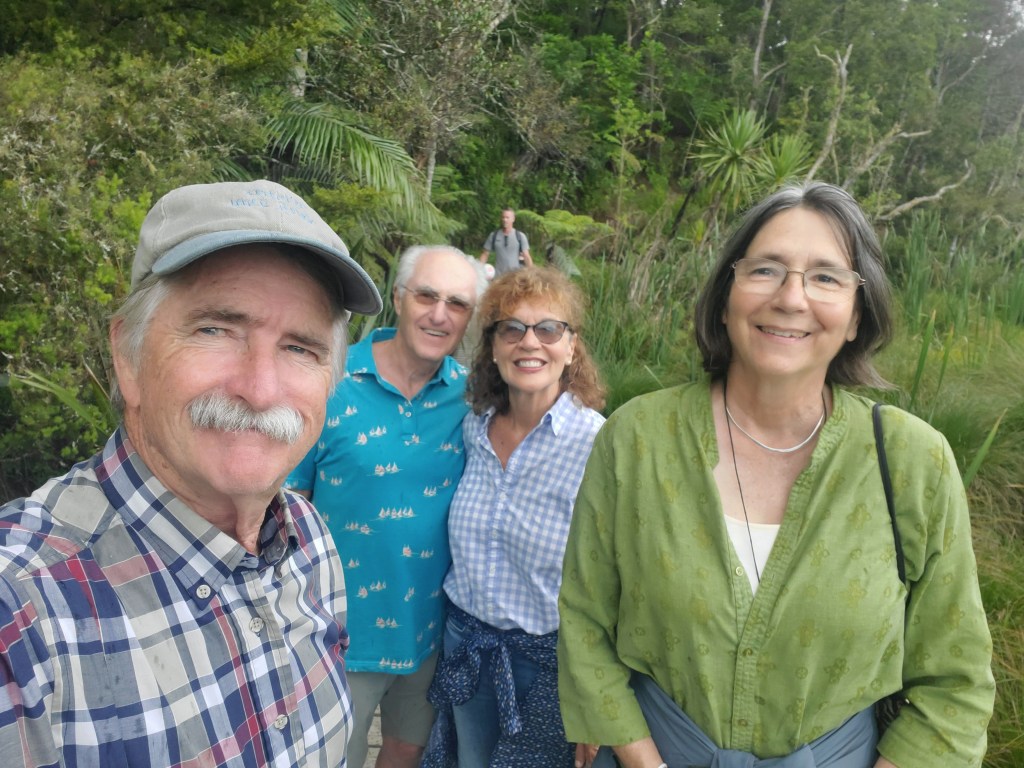
Another great hike in a protected patch of wild protected land less than a kilometer from the heart of Auckland metropolitan development.
Jeff and Penny pointed out eels in the stream we crossed and many other florae. The path has a dead end now because of th terrible floods a couple years ago from the hurricane or cyclone, I guess.
As we came back to the car, we passed some young people hitting golf balls. Woody asked if he could hit a few and they generously said of course. I think he hand fun. At the cars, we said our goodbyes to P&J. When we get back to Winters we’ll have them over for dinner and share photos.
We drove back to the rental, last time up that steep driveway!

We finished up the Indian food for our diner and packed for the long drive south tomorrow. On the road, we had been communicating with a longtime friend, Stuart Theil someone we know from Davis back in 1979. He had gotten in touch with us and said his daughter was staying in Raglan, a tiny community near our next stop, New Plymouth. So, we decided to try to meet her tomorrow. These are the things we enjoy, taking advantage of opportunities to meet someone new along the way.
We got out and away by 8am and headed south on Highway 3. It was beautiful countryside—hilly, green fields. the hilly green land—many hills covered in trees. We got off the bigger road and followed a windy, hilly road. Along the way, we’d see cows and sheep in green fields. One scene I loved—the countryside is terraced over the years by sheep walking across the hillsides—one farm we drove by had a number of white sheep resting on these terraced paths. They looked to me like delicate China sheep on green what-not shelf that some giant’s child had placed there.
We got to Raglan and found the Orca Café near the water. Woody went in to find a table out in the back. I waited on the corner and a young, athletic woman approached me as we made eye contact. She asked, “Are you Rebecca?” just as I said, “Are you Serena?”
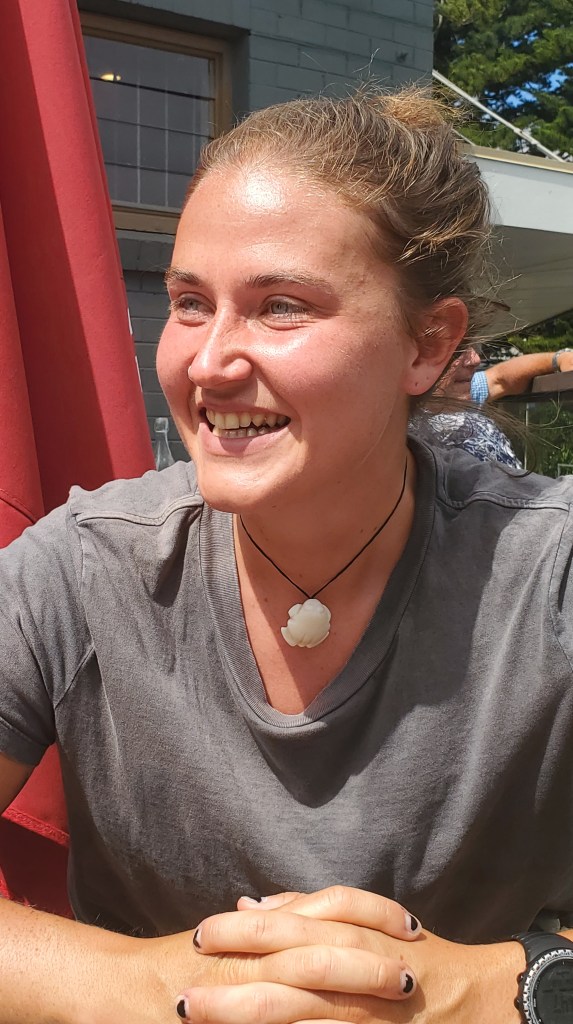
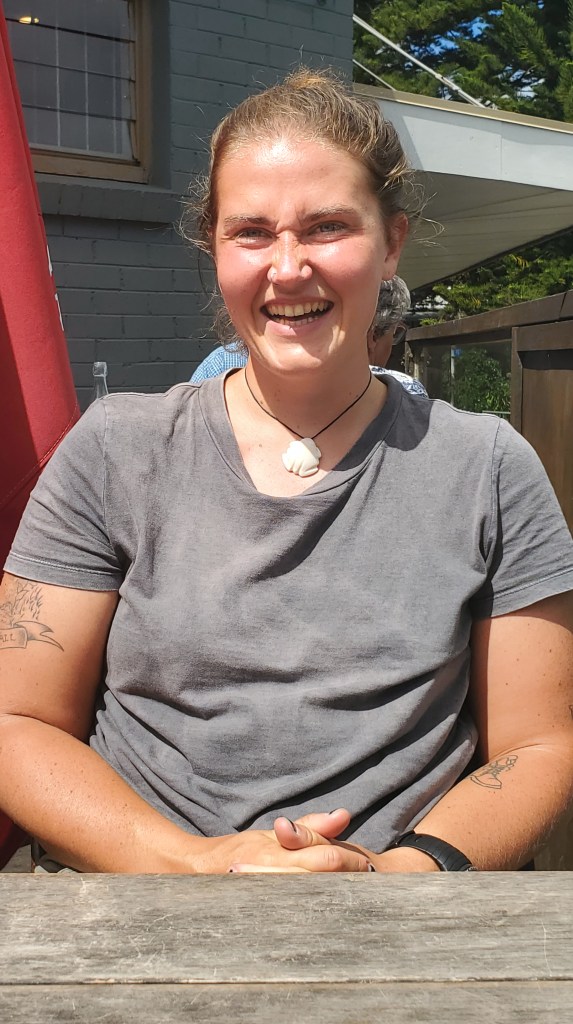
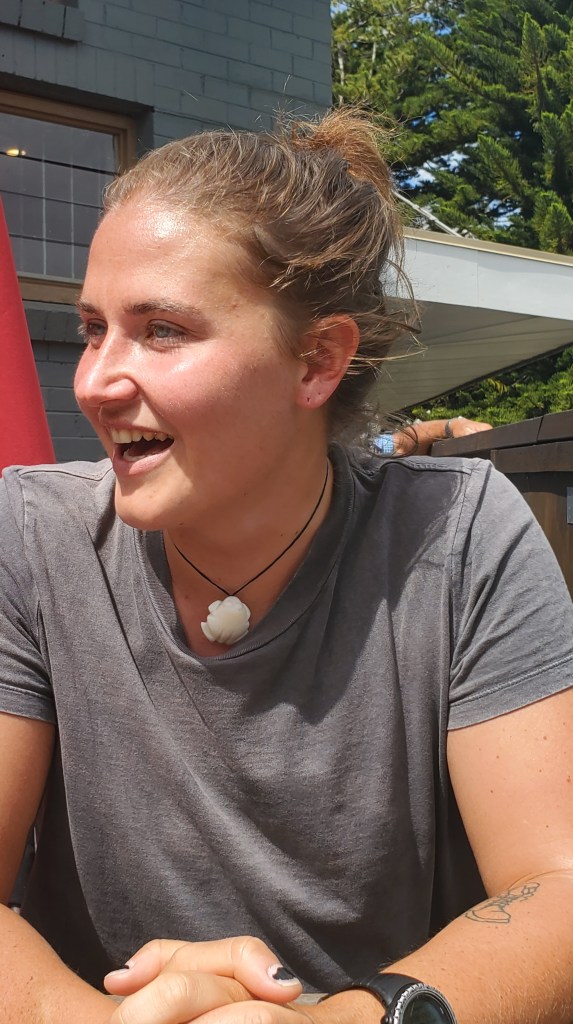
We found Woody out back and ordered lunch. We talked about her life—she’s spending a year in New Zealand on a work permit so she can travel and get service jobs—picking fruit of bartending.
Right now she’s between jobs, living in a hostel. Soon she is going to get to climb Mount Taranaki near New Plymouth, and then she’s heading back to the South Island. We talked about her dad and stories that we remembered from 45 years ago. She knew the story of the “Rolls Cannardly” and the “misled” story, stories only we thought we knew up ’til now. We had a fun visit–2hours of getting to know each other.
We enjoyed getting to know Serena. Such a lively, energetic, and good-hearted young woman. I envied her ability to live within a small footprint and travel a nomadic lifestyle. And when else would she have the chance to do it? Carpe diem! And so must we! We had only a couple of days to get back to Wellington through New Plymouth and then to travel to the South Island.
What a marvelous, whirlwind trip we’ve had on the North Island. So many things we got to do, and so many we did not have time for! Partially because of Rebecca’s Covid, we had to cancel some of the Rotary Hosting experiences we had set up. But as Rebecca always says, there are a thousand great things to do here, and whatever 100 we do, we are lucky. And we are!
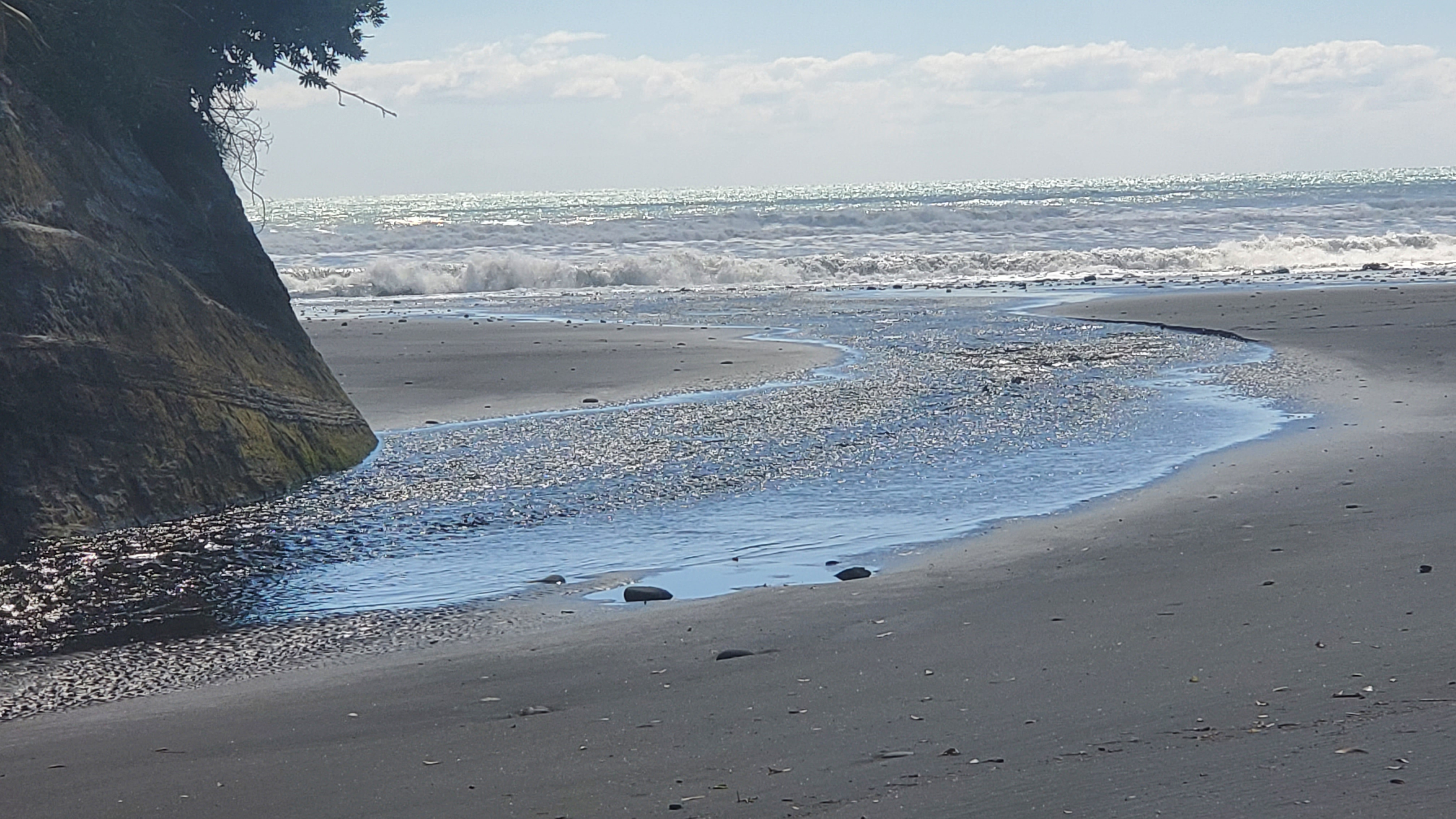
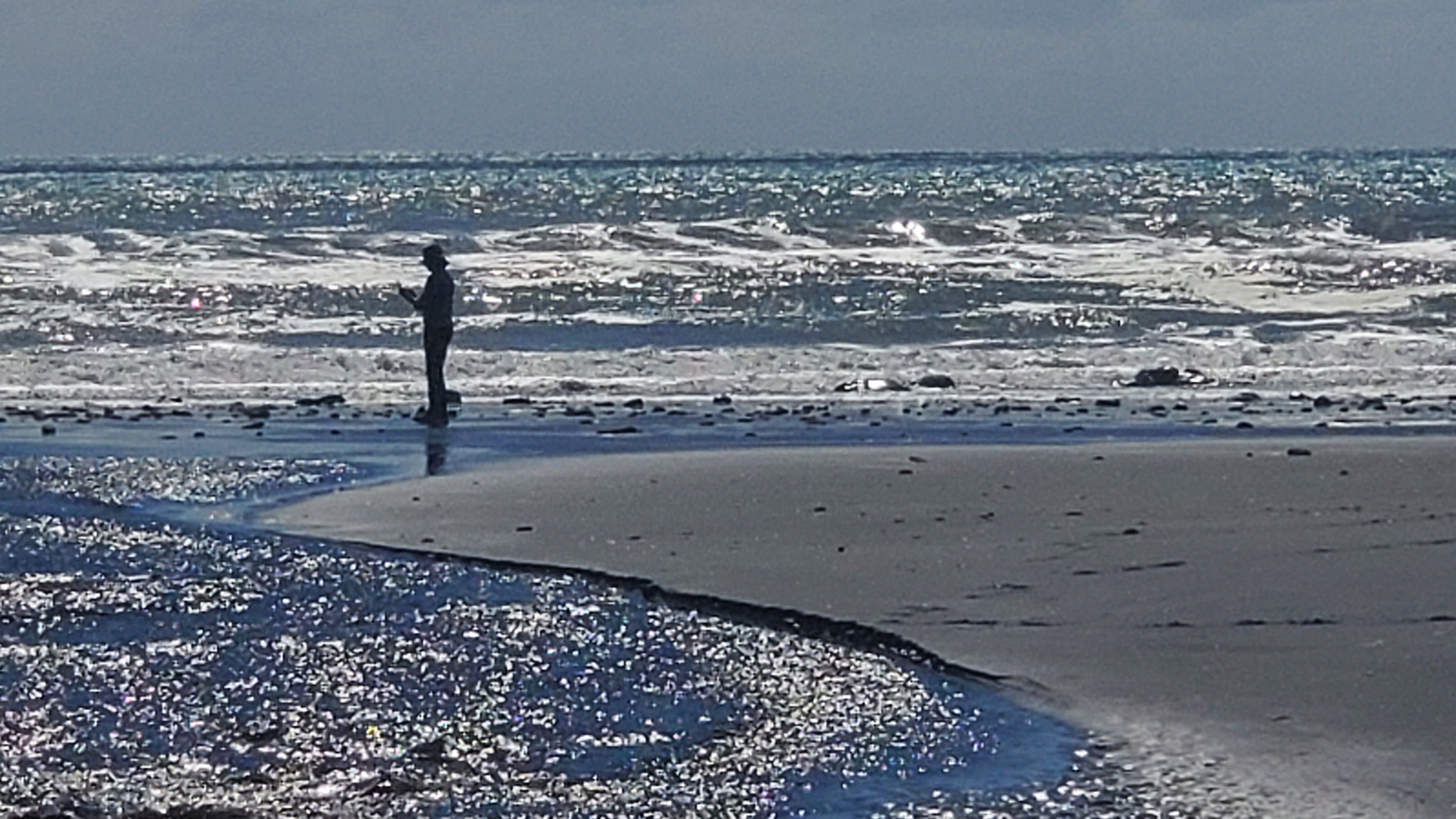
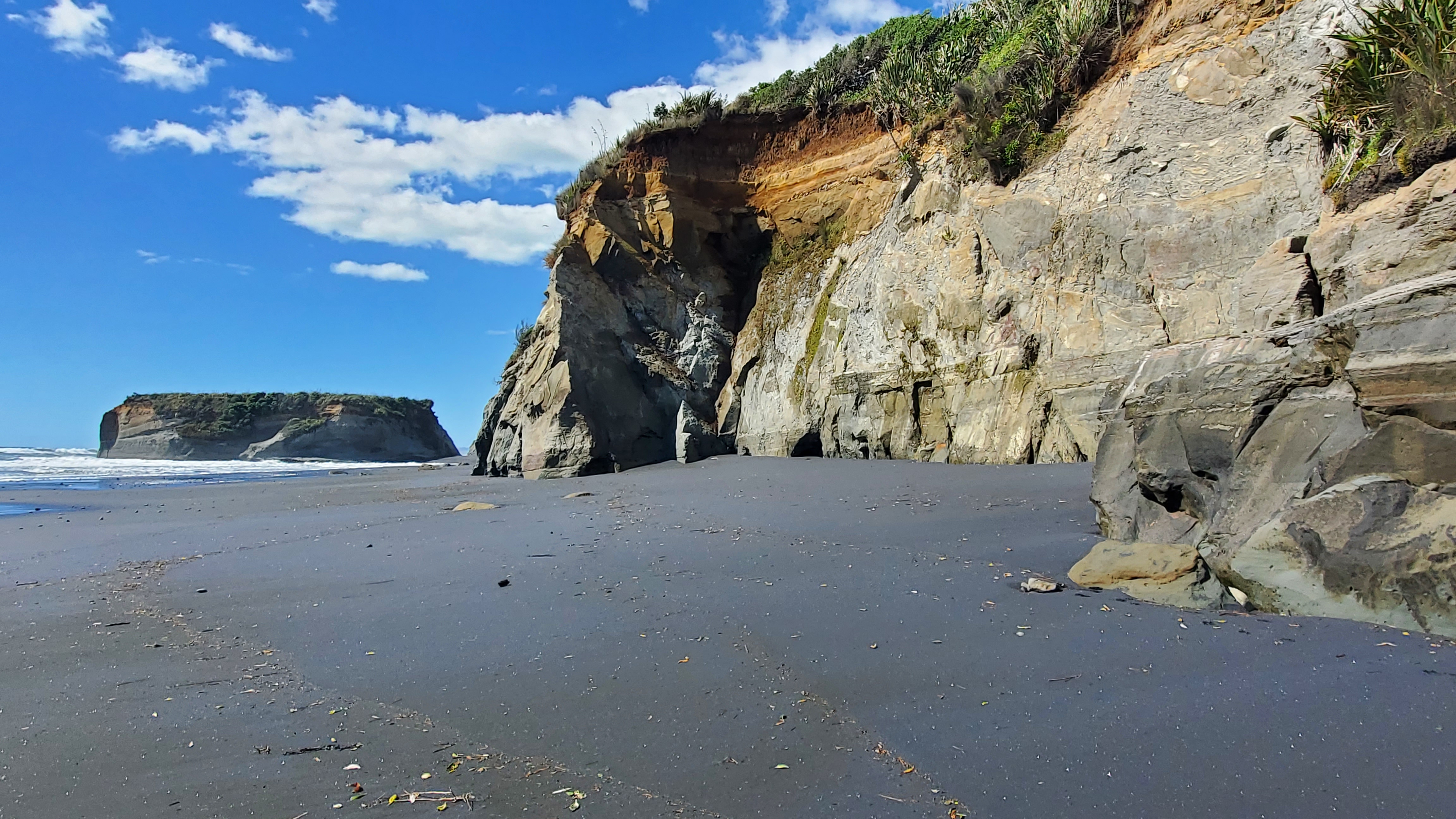
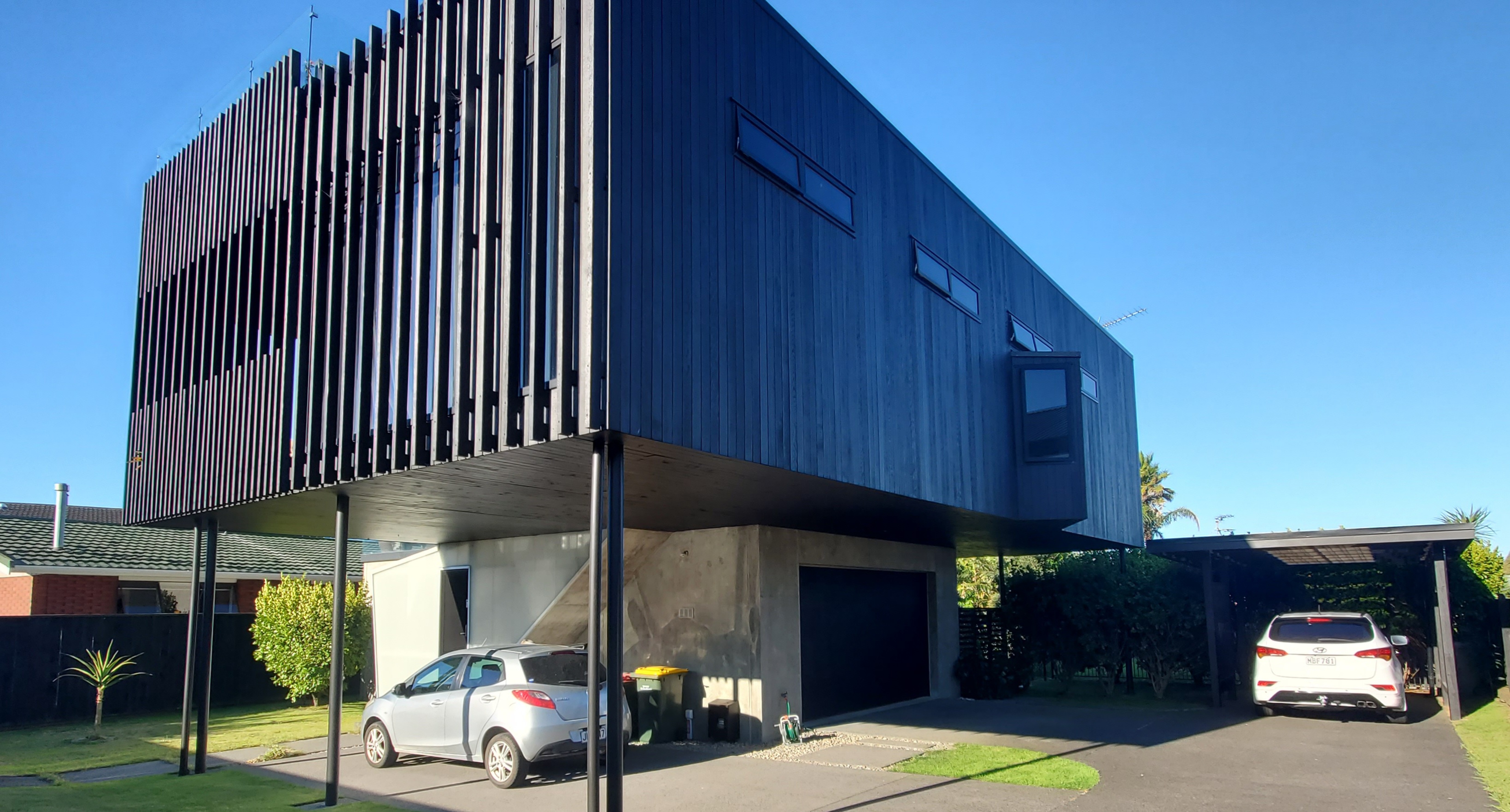
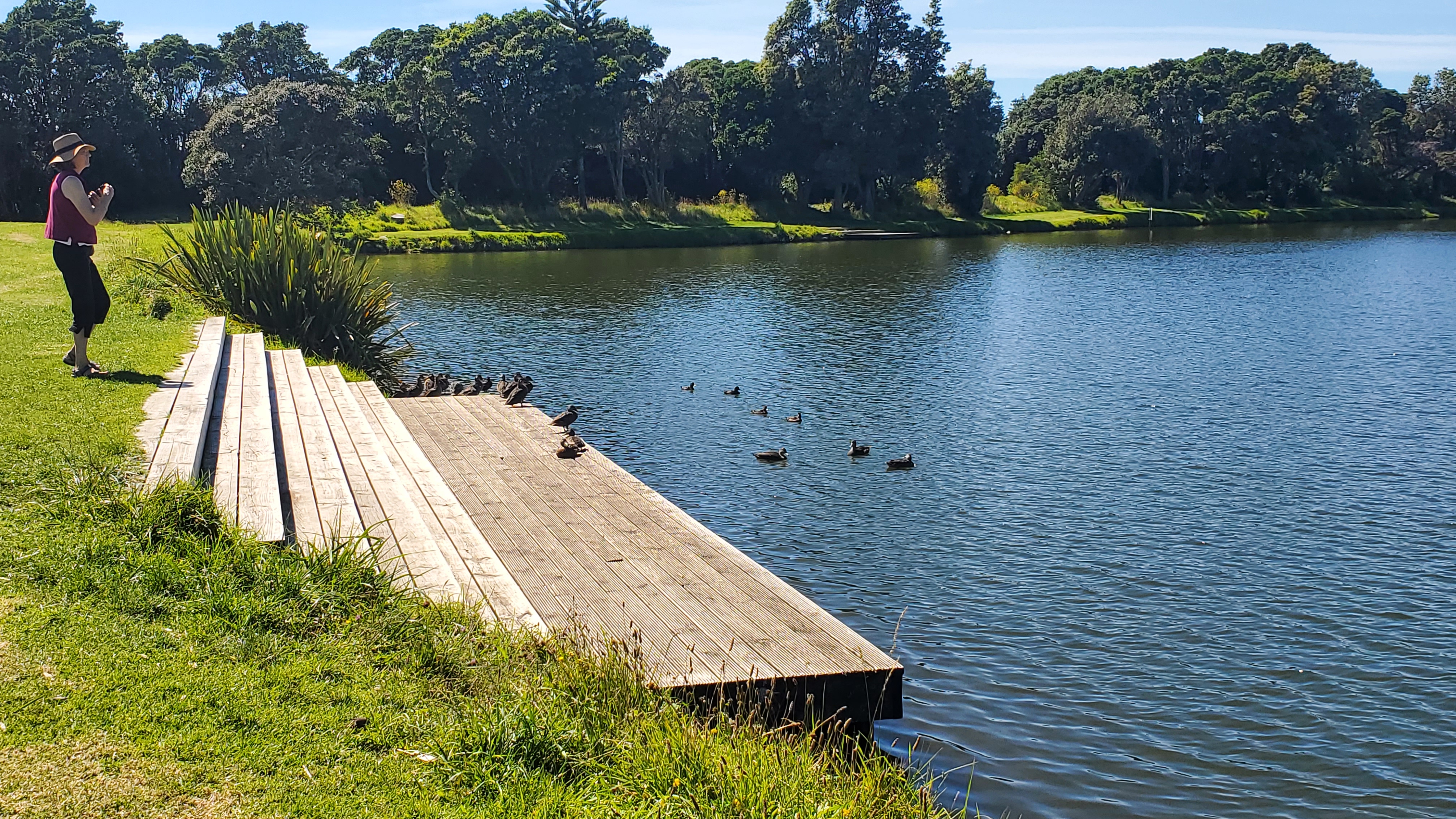
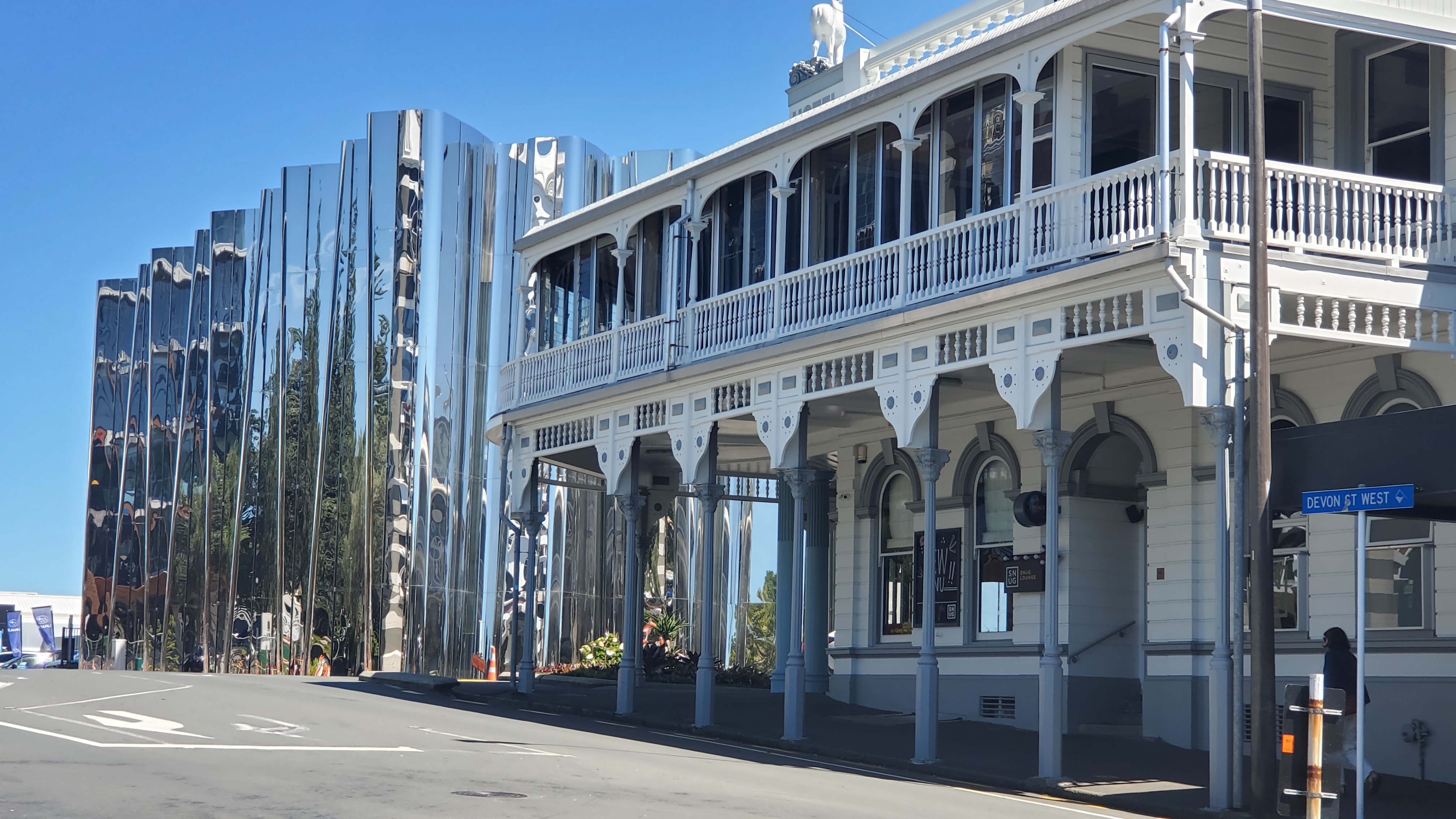
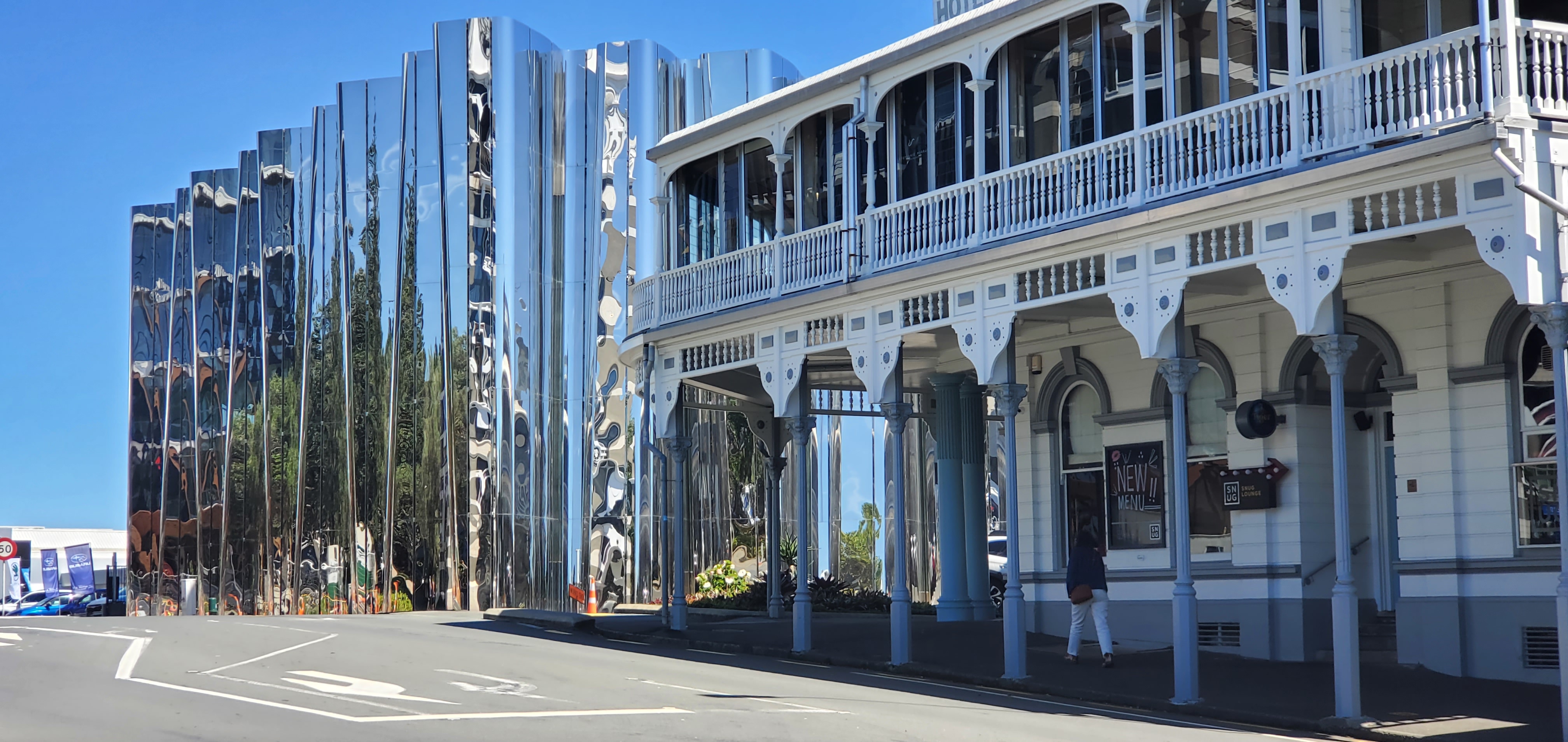
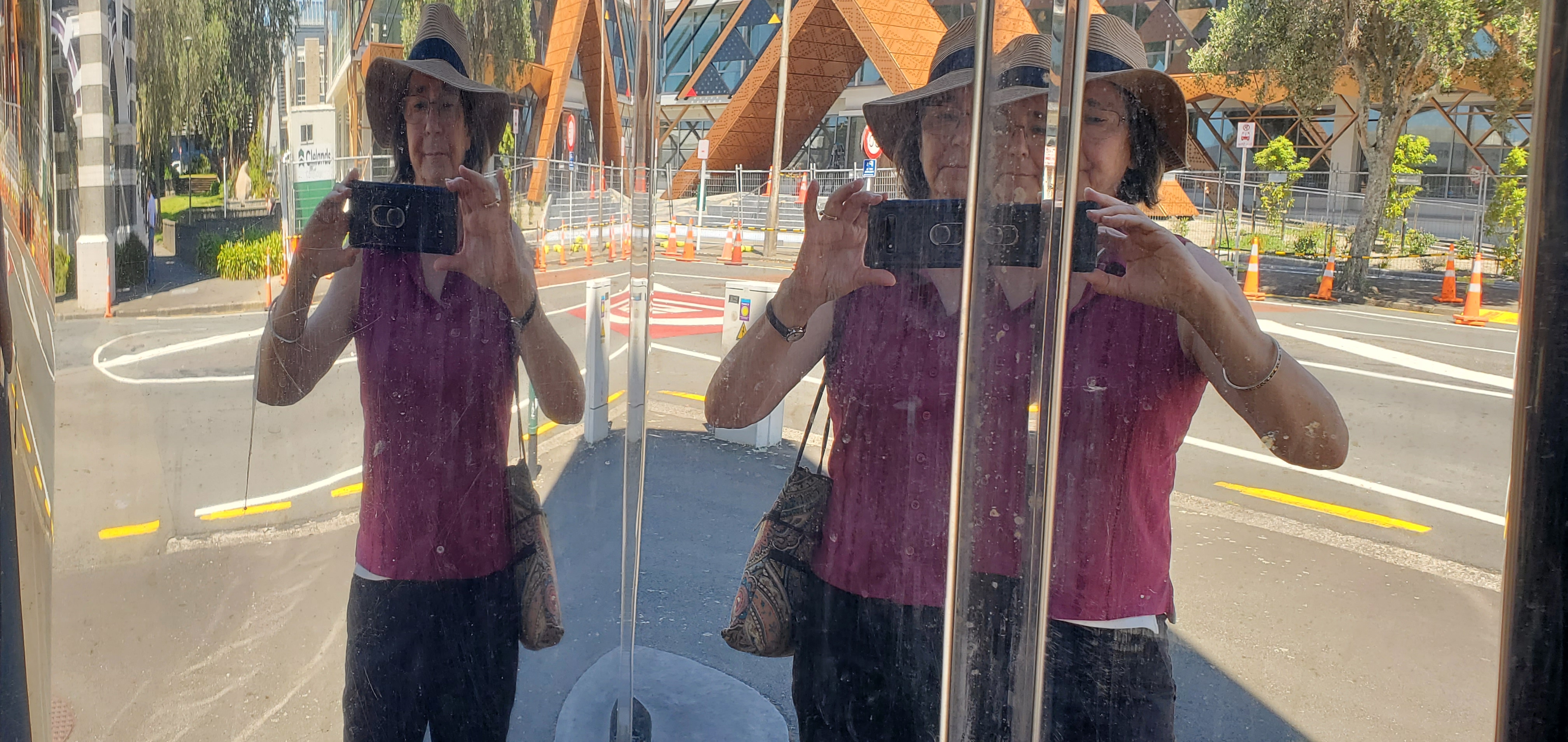
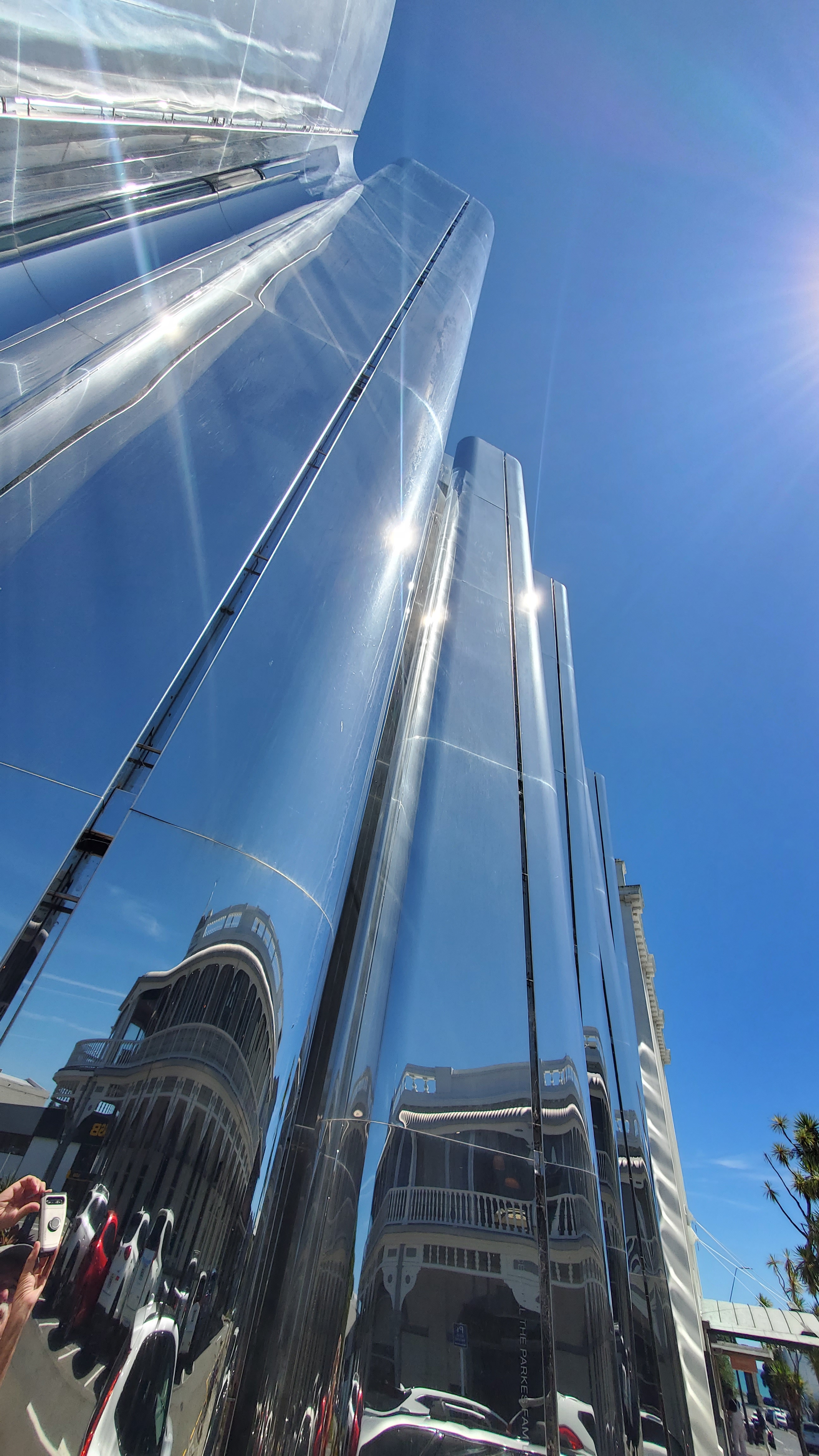
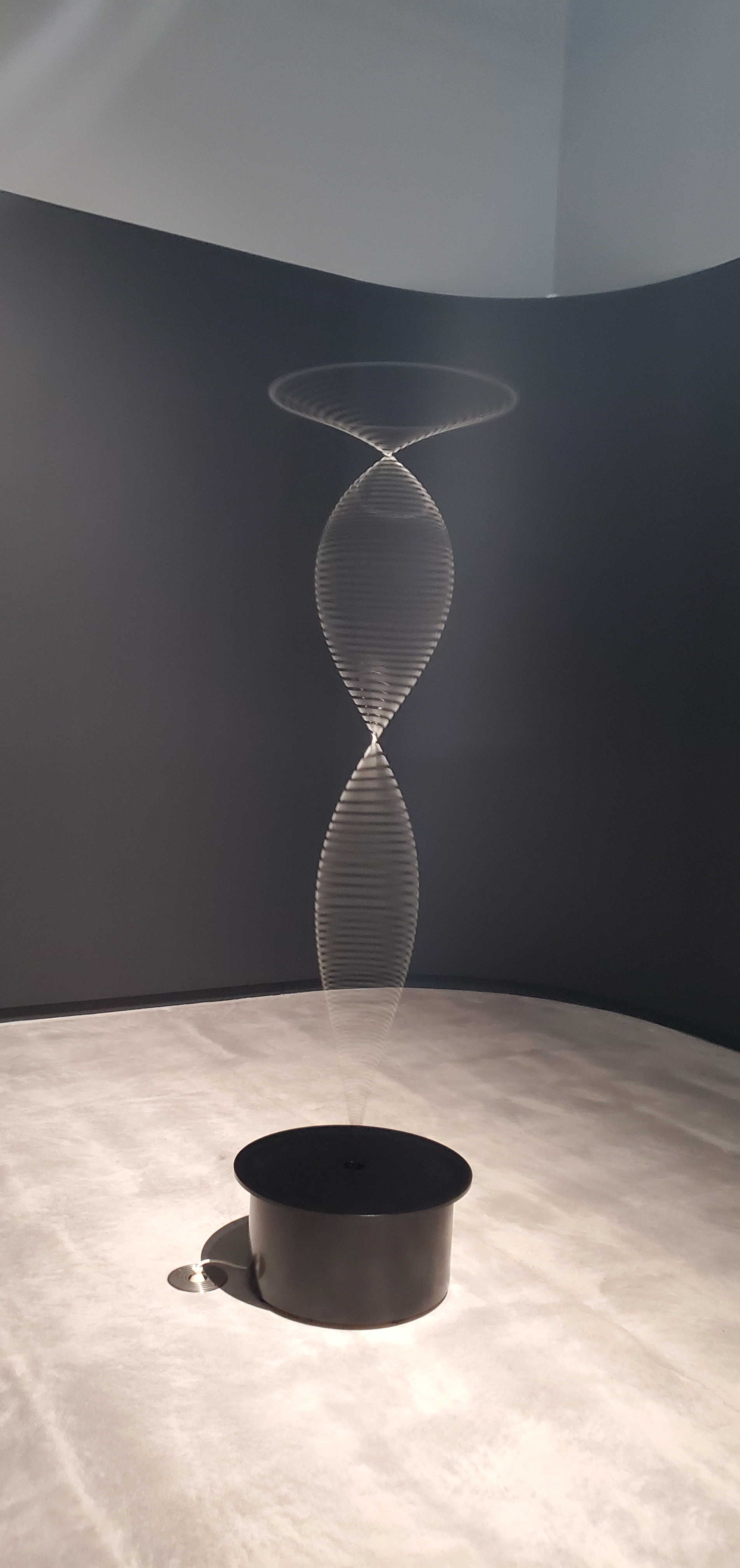
Below are some photos from our quick stop overnight in New Plymouth. An artistic community, its signature installation is the museum of the Len Lie, the kinetic artist known for large installations that are wind or mechanically moved to cause oscillations or a sort of music. We spent a relaxing few days there before returning to Wellington to catch a plane to Christchurch, on the South Island.


 Fridaes' Adventures
What a wonderful trip you are having, despite Covid for Rebecca. New Zealand is such a beautiful place and there is so much to see. We enjoyed a visit to a sheep station for the shearing, a trip up the coast of the North Island to see the original Maori settlements and to see the beauty of the mountains and lakes on the South Island. I have a pen pal in Auckland who I have been writing since I was 13! We visited her too. It was like having a sister. Keep your spirit of adventure… the world is indeed a good place!
LikeLike
Wow! What a marvelous gift to have a life-long correspondence like that and then meet face-to-face! Was that the first time you met in person?
LikeLike
I love your travels!
LikeLike
I’m glad you enjoy them! Thanks for reading!
LikeLike
Marvelous story with fantastic pictures. You are having such a wonderful time except for the nasty “cold.” You saw a lot more than I because my trip was geology based. Perhaps I should go back and see more, especially Australia! Hope that Becca is feeling better.
LikeLike